Do you wonder what are the other soil alternatives to use for healthier plants? When we hear or see the word “garden,” we often think of a space filled with beautiful plants, fresh vegetables, and blooming flowers. and we want that, right? Then when we finally have a garden, we realize that it is too much work and so messy because of the soil, so it got us thinking of alternatives for soil.
In this blog, we will discuss the science of soil, talk about the alternatives for soil, and discover different methods available to grow your plants healthier and more beautiful without soil.
Can I grow plants without soil?
The answer is yes! You can grow plants without soil. Researchers established long ago that soil is not really necessary for plants. However, it is essential to know that plants cannot grow without the soil’s necessities.
Plants need structural support, protection, moisture supply, vast nutrients, and oxygen around their roots. These things usually go together when you use soil. However, if you can provide the nutrients the plants need through fertilizers and give support and good aeration using alternative materials, the soil then is not really vital for plants.

Monstera Thai Constellation in LECA
Remember, the soil simply holds the minerals and nutrients necessary for plant growth. I wrote another article here discussing what is NPK, Plant nutrition and fertilizers.
I know it sounds a lot, but fret not because this article will teach you how to provide these necessary components for your plant to thrive without soil.
Why do we need substitutes for soil?
We need soil substitutes simply because the soil does not provide all the things plants need.
Take note that plants have several things they need for them to grow. This includes abundant light and sufficient moisture, adequate space for their roots and a good amount of oxygen, a slightly acidic pH, and the proper nutrients, among others. And they need these things consistently.
I wrote another article about nutrient deficiency in plants, I encourage you to read it and spot the signs early regardless of what substrate you use for gardening.
So, if you are a busy person like me and want to stop constantly babysitting your plants, one of the solutions is to look beyond the soil.
Related: pH Water Levels for the Plants
What are the alternatives for soil?
There is a variety of soil substitutes to choose from. Some gardeners even make their own “soil” out of different materials.
The list below shows the soil alternatives, their benefits, and their origins, among others.
Make sure to read the advantages and disadvantages carefully to choose the suitable alternative for you and your plants.
- LECA
- Vermiculite
- Perlite
- Peat moss
- Sphagnum moss
- Coconut coir, husk, and chunks
- Sand and horticultural grit
- Compost
- Rice Hull
- Pon
- Seramis
- Bark
LECA
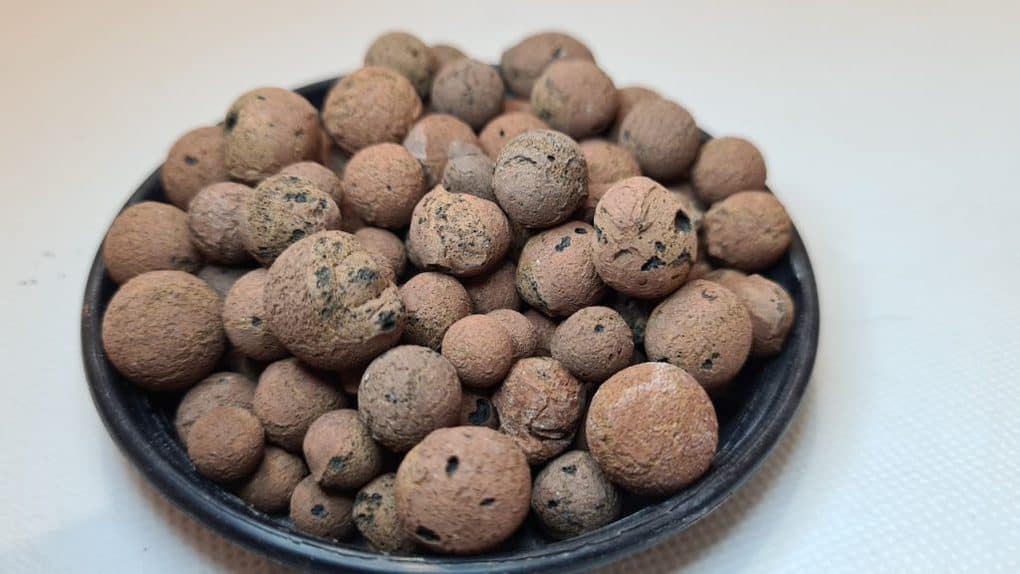
One alternative that you can use is LECA. LECA is the acronym for Lightweight Expanded Clay Aggregate. To make it simple, LECAs are clay balls that can soak up water. The soaked-up water in the clay balls can be used to water your plants.
So, if you are a busy person like me, watering plants would not be a problem anymore.
LECA Advantages:
- LECA makes the watering of plants more accessible.
- The risk of overwatering or drowning plants is also shallow.
- LECA also gives good aeration to the roots which makes oxygen readily available.
- Because of the sufficient amount of oxygen, root rot is less of a risk.
- The risks of pests infesting your plants are also significantly reduced.
LECA Disadvantage:
Unlike soil, LECA does not naturally contain any nutrients. Again, these are just clay balls that soak up little water. Since your plants need nutrients, you will have to add fertilizers to the water.
Related: LECA vs Soil: Is LECA Better than Soil in Growing Plants?
Vermiculite
Another alternative is vermiculite. Vermiculite is a mineral, meaning it occurs naturally, that is glossy and flakey. Its colour varies from dark grey to sandy brown, so you can still be aesthetic.
Vermiculite can be used in a variety of ways from soil-free gardening, seed germination, root cuttings, lawn seeding, transplanting, and bulb storage among other things. Most importantly, vermiculite is 100% safe. It does not contain any harmful chemicals to humans and plants.
Vermiculite Advantages:
- Vermiculite has a very impressive water retention capability.
- Vermiculite is sterile.
- Vermiculite has a neutral pH.
- Vermiculite aerates soil well if used together.
- Vermiculite is good for root growth.
- When used with other mediums, it increases the retention of nutrients.
- It does not rot.
- Due to its nature, vermiculite prevents mould.
- It strengthens root anchorage.
- It promotes the rapid growth of roots and plants in general.
- It is very versatile for it can be used alone or combined with other materials.
Vermiculite Disadvantages:
- Vermiculite is expensive. Aside from that, it is not renewable so you have to change it often. Vermiculite can also retain too much moisture which can cause the drowning of the plants.
Perlite
Perlite is actually a soil additive, but it can also be used as a primary growing medium. It is a non-toxic and lightweight soil amendment or alternative. It does not have any nutritional value to the plants, but it gives a lot of benefits. Make sure to read the benefits below.
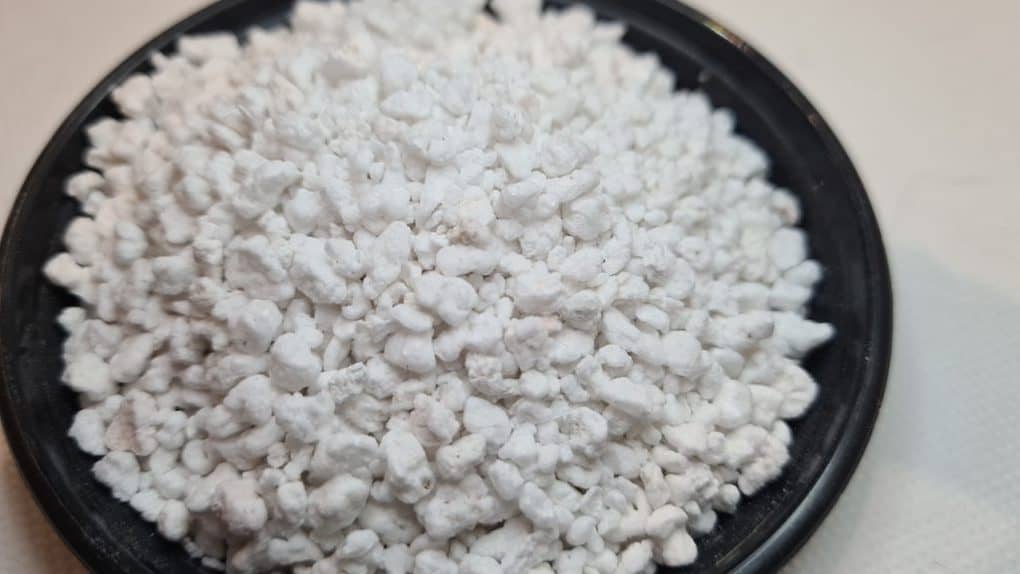
Perlite is used in different industries, but, in gardening, it is primarily used to improve soil structure. It provides good drainage and aeration. Seasoned gardeners call it “air for the soil.”
Perlite Advantages:
- Perlite retains its shape regardless of the environment such as heavy rain.
- Perlite does not decompose which makes it ideal to use for plants that are most of the time permanently potted such as succulents.
- Perlite has a neutral pH.
- Perlite does not have toxic chemicals.
- Perlite has good water drainage.
- Perlite provides excellent aeration which the plants love.
Perlite Disadvantages:
- Perlite has poor water retention since it is made of volcanic glass.
- Perlite can easily be blown away and has the tendency to float in excess water because of its weight.
- Perlite is a non-renewable resource.
Sphagnum moss
Sphagnum moss is one of the things a gardener adds to retain moisture in potted plants. It is beautiful and stringy which is why, most of the time, it is used in hanging pots or baskets. However, sphagnum moss can also be used as an alternative for soil.
The term “sphagnum moss” refers to a group of moss that has around 380+ members.
It is commonly used in growing orchids and succulents. It has lightweight, and it holds moisture very well.
Related: Best soil mix for succulents
Sphagnum Moss Advantages:
- Sphagnum moss has a neutral pH which is great for retaining moisture.
- Sphagnum moss is the best choice for terrariums.
- Sphagnum moss is an alternative to soilless potting medium.
- Sphagnum moss is a great form builder because it can create and hold shape.
Sphagnum Moss Disadvantages:
- Sphagnum moss may cause a disease called sporotrichosis that can cause tiny bumps and skin ulcers.
- Sphagnum moss may absorb too much moisture
- Sphagnum moss is a non-renewable resource.
Peat moss
Peat moss is a decomposed organic matter, which is usually dark brown and fibrous, that occurs naturally in cold, marshy places.
It doesn’t really decompose because peat moss is so anaerobic and this process takes very slowly.
Peat moss Advantages:
- Peat moss suits plants that need acidic soil very well to neutralize alkaline soils.
- Peat moss has a great water retention capacity.
- Peat moss is sterile so it is almost disease-resistant.
- Peat moss works great as well in hydroponic gardening.
- Peat moss can also be mixed with soil and other alternatives to the soil.
- Peat moss does not easily compact when walked on by people.
Peat moss Disadvantages:
- Peat moss is a non-renewable resource so there is an environmental concern.
- Peat moss is much more expensive than traditional soil.
- Peat moss does not let some plants grow in it such as lavender, ginger, and blackberries among others.
- Peat moss cracks the soil when it gets dry.
Coconut coir, husk, and chunks
Coconut coir or coco coir is basically everything in between the shell and the coat of a coconut. It is made up of two fibres – brown and white fibres.
Brown coir is obtained from ripe coconuts, and this is strong but not flexible. The white coir is obtained from pre-ripe coconuts, and they are more flexible but more fragile than brown coir.
This coconut coir, husk, and chunks are popular with hydroponic gardeners for a lot of good reasons.
Coconut coir, husk, and chunks Advantages:
- If you want to transition from soil to soilless gardening, coconut coir is the best path because it is easy to take care of.
- Coconut coir retains moisture effectively and provides a good environment for plants, especially for their root development system.
- Unlike mosses, coconut coir does not have any environmental concerns in it for it is a repurposed waste product from a renewable resource.
- It is less complex than the traditional hydroponic gardening system.
Coconut coir, husk, and chunks Disadvantages:
- Coconut coir does not have any nutrients in it, so fertilizers are needed.
- Most coconut coir available in the market is dry and compressed so it needs to be rehydrated first before you can use it.
- Coconut coir, husk, and chunks can be expensive, especially when used with mixes.
Sand and horticultural grit
Horticultural sand and grit is basically a material that improves soil drainage which is very important for plant growth. This is particularly and mostly used for succulents.
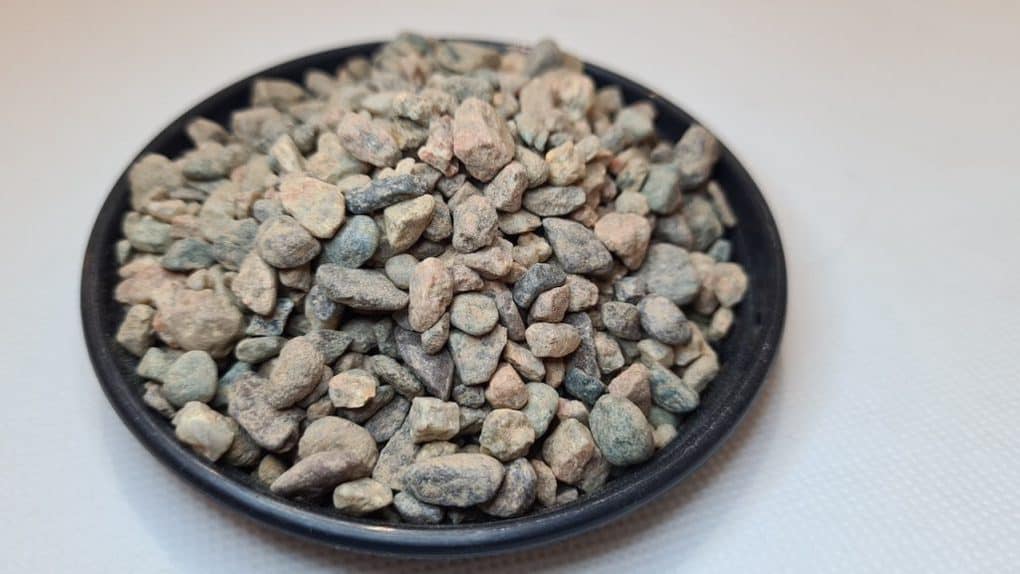
Remember, if the soil is poorly drained, roots may be deprived of oxygen. If they do not have sufficient oxygen, they will die.
In essence, horticultural sand and grit include various materials like crushed quartz, sandstone, and granite. This means that it is lime-free, therefore, it will not affect the pH balance of the environment. Rather, it can actually improve it.
There are a lot of benefits to using horticultural sand and grit which is why people love it.
Sand and horticultural grit Advantages:
- It has a balanced pH which is great both for plants that love acidic environments and plants that prefer basic environments.
- Horticultural sand and grit dry out quickly so it offers great aeration of the soil which can also be a good ingredient for composting.
- It improves aeration and drainage.
Sand and horticultural grit Disadvantages:
- The only drawback of using horticultural sand and grit is its price. It is too expensive compared to traditional soil and other alternative materials.
Compost
Compost is a product of the decomposition of organic matter which may include leaves, grass wood waste, and animal manure among other things. These matters are combined with water and are digested by microorganisms. With that, you can just imagine all the nutrients that compost has.
Compost Advantages:
- Compost has a huge amount of organic matter which leads to better soil stability, higher water retention capacity, and improved cation exchange capacity.
- Compost has enhanced microbial activity in it due to the number of microorganisms present.
- Since compost has microbes in it, it is actually more or less resistant to diseases.
- There are also a lot of nutrients present in compost due to microbial activity.
- Compost increases the resilience of the plant-soil system which means there would be less impact from adverse weather conditions.
Compost Disadvantages:
- Compost is not readily available and may take some time to form.
- The quality of the compost might be compromised due to contamination, so it is important to do this carefully.
I wrote another article here about How to Make Compost For Plants (Detailed Guide). I encourage you to read it to know more about composting.
Rice Hull
Rice hulls are one of the most sought soil amendments because of their ability to improve drainage, increase water-retention capacity, and maximize aeration. Unlike perlite, rice hull does not require mining and unlike peat moss, no land excavation is needed.
Rice hulls are the non-toxic and biodegradable by-products of agriculture, and they have a lot of benefits for your plants.
Rice Hull Advantages:
- Rice hull is lightweight, loose, and airy which is perfect to have an oxygen-rich system.
- Rice hull does not threaten the environment because it is actually a by-product of another material, so it is more sustainable.
- Rice hull also has a neutral pH.
- Rice hull is cheap and affordable.
- Rice hull has characteristics that are great for growing sensitive seedlings.
- Rice hulls provide large volumes, a great drainage system, and the right porosity.
Rice Hull Disadvantages:
- Rice hull decomposes after some time and when that happens, the soil compresses again.
- Rice hulls can cause nitrogen deficiency which may affect the plants’ growth and development.
- Rice hull is also kind of expensive compared to the other alternatives such as perlite.
Pon
Pon is simply a growing medium that can be used as an alternative to soil. This substrate gains more popularity as influencers start talking about it. They say that these pons help your plants avoid pests, prevent fungi, and allow a balanced diet. They also claim that pons has more benefits that the actual soil or the famous, LECA.
Pon Advantages:
- When you use pons, you will spend less time watering your plants.
- There is no need to nanny your plants because pons absorbs sufficient amounts of nutrients and water that are just enough for your plants.
- Pest problems will not stress you out due to the nature of pons.
- Pons allow easier absorption of nutrients therefore plants grow faster and healthier.
- Due to the good aeration it brings, there will be a lesser chance of root rot.
- Pons’ pH is neutral.
Pon Disadvantages:
- Pons are more expensive than traditional soil and their counterpart, LECA.
- If you are a beginner, transferring larger plants in pons will be a huge problem.
Seramis
Seramis is similar to LECA. It is made up of baked clay that expands. The clay undergoes a lot of tedious processes, and the resulting product is a highly porous clay that can hold so much water.
There are different types of seramis depending on the plants that you want to put in there.
Seramis Advantages:
- The main advantage of seramis is its reliability in protecting your plants against fungi and insects.
- Seramis also has large pores that allow effective water absorption and breathing.
- Seramis prevents water and other fluids from flowing through the drain.
- It holds nutrients for a long period of time.
- It is versatile. It can be used alone or in combination with others.
- Seramis is reusable when cleaned thoroughly.
Seramis Disadvantages:
- Seramis is much more expensive than LECA which is an alternative to seramis.
- Seramis is not easily available in the market because of the high demand for it.
Bark
Bark as a growing media is not entirely new. In fact, it has been a staple in crop production for more or less 30 years. It is mainly used for huge containers for greenhouse, perennial, and nursery crops.
Bark Advantages:
- Bark adds more organic matter to your plants.
- It makes your plants less susceptible to pests and diseases.
- The bark is a low water-holding capacity medium which reduces the risk of over-watering.
- It has a high bulk density that increases the stability of the container.
- Bark prevents loss of moisture.
- It protects your plants or crops from extreme weather conditions.
Bark Disadvantages:
- Bark can absorb too much nitrogen which may damage the plants.
- Not all barks are the same; some of them may contain toxic chemicals if not properly processed.
- Bark might be expensive due to its initial heavyweight during shipment and the processes that it undergoes before it can be used as a medium for growing plants.

I hope that helped you to learn more about the soil alternatives to help you grow healthier plants indoors or outdoors. Have you used any of these soil alternatives before? Which one is your favourite?
ABOUT THE AUTHOR:

Zany Plant World
Succulent and Houseplant blogJoin me in exploring the beautiful and colourful world of succulents and houseplants, one plant at a time! Zany Plant World blog aims to help newbies and fellow plant enthusiasts grow healthy and happy succulents and houseplants at home. Turning your house into an urban jungle oasis that can give you the zen vibes that we all need in this crazy and busy life.