Are you worried about your plants turning yellow or showing signs of disease? At this point, you should know that the plant’s health concerns are not caused primarily by pests or ill-causing organisms. There are a lot of factors to consider, one of which is nutrient deficiencies. Nutrient deficiency happens when your plants get too little of a particular nutrient. The opposite is true – too much of a nutrient can cause health issues.
Fortunately, you can use plants’ visual signs to look for nutritional deficiencies more easily. Some observable symptoms include discolouration, stunted growth, or distortion of stems. In this post, we will discuss the most common weaknesses in plants and how to fix and prevent them.
Nutrient or nutritional deficiency is one of the main reasons plants do not achieve optimal growth, leading to crop losses. Nutrient deficiency in plants implies that there is restricted or limited access to essential macro- and micronutrients that cause alteration in crop development. Deficiency happens because plants need specific volumes of certain traces of elements and minerals at each stage of their growth.
What are nutrient deficiencies in plants?

As mentioned a lot of times in the previous blogs, all plants need nutrients to thrive. If you are planting in soil, your plants get most of the nutrients from the soil and the fertilizers you use. If you are into hydroponic and soil-less gardening, your plants are most likely getting the nutrition they need solely from fertilizers.
Read more about Plant Nutrition and Fertilizers.
Whatever type of growing method you use, you must ensure that your beloved plants have access to the correct, sufficient, and balanced nutrients.
Remember that plants need more significant amounts of certain elements called macronutrients. Examples of macronutrients are nitrogen, calcium, potassium, magnesium, and phosphorus, among others.
Plants also need other essential nutrients but in smaller amounts than macronutrients. These nutrients are called micronutrients. For instance, boron, molybdenum, copper, iron, etc., are micronutrients.
From the word itself, nutrient deficiency is due to lacking nutrients in the growing medium or the fertilizer. Environmental factors may also cause deficiency, such as harsh growing conditions. Extreme conditions may alter the plant’s ability to absorb nutrients. For instance, when the growing medium becomes too acidic or basic, the ability of the roots to take up nutrients changes.
Read more about PH Water Levels for Plants.
If it persists for a long time, nutritional deficiencies may have a huge impact on a plant’s natural lifecycle, like the ability to produce fruit or flower.
What are the signs of nutrient deficiency in plants?

The most common and observable sign that a plant has a nutrient deficiency is discolouration. Still, not all plants exude discolouration right away so it is vital to know the other symptoms of nutrient deficiencies. Take note that plants may exhibit all the symptoms simultaneously.
Here are the common symptoms:
- Occurrence of yellow leaves
- Formation of yellow and brown leaf edges
- Prevalence of holes in the leaves
- Burnt-looking leaves
- The purplish and reddish tone of the leaves
- Yellowing veins
- Small and shorter leaves
- Irregular-shaped leaves
- Stunted and underdeveloped roots
What are the causes of nutrient deficiency in plants?
Nutrient deficiencies in plants often occur due to the lack of nutrients, minerals, and chemicals in the soil or in the growing medium. Deficiency may occur due to one or more of the following
- Deficient required nutrients in the growing medium
- Insufficient moisture in the soil, which affects the transport of nutrients
- Plant’s ability to absorb nutrients is restricted. For example, some plants absorb nutrients better in acidic conditions.
- The nutrient cannot reach the part of the plant that is needed the most,
- Too much concentration of another macronutrient competes with the target nutrient.
Sometimes, nutrient deficiencies may be caused by the plant’s ability to absorb the nutrients. Both of these factors may contribute to nutrient deficiency in plants.
Aside from the growing medium’s state, plants’ ability to absorb nutrients may also be affected by different factors that impair nutrient transportation. The factors include
- Damaged or small roots
- Too much or too little irrigation
- Improper drainage,
- Varying pH.
Another critical factor to consider is the plant’s need for particular nutrients at a specific phase of its development.
For example, gardeners must immediately address nitrogen nutrient deficiency when the plant is still in the active growth phase. The plant’s growth may be stunted if not discussed in this phase.
On the other hand, if the plant is in the blooming and fruiting stage, it is crucial not to have potassium and phosphorous deficiency. If these deficiencies occur, they must be addressed immediately.
Checklist before starting a treatment for nutrient deficiencies in plants
People have the tendency to start treatment right away once they have seen the signs of nutrient deficiencies. However, it is vital to check first whether the treatment you are planning give is appropriate. You may use the checklist below to easily assess the issue.
- Look for signs of illness and/or insects. There are some pests that can cause discolouration in the leaves just like the discolouration caused by nutrient deficiency, such as spider mites and worms. Some viruses and other disease-causing organisms can also alter the appearance of the leaves.
- Assess the soil. If you are planting in soil, check whether you are overwatering or underwatering it. Remember that discolouration of the leaf and the stunted growth of plants can also be caused by the quality and weight of the soil. Is your soil too compacted or is it too light?
- Check the water. As we all know, water plays a very important role in keeping plants healthy. You have to check whether the water you are using is hard water or soft water. Hard water already contains minerals in them so you have to adjust the nutrients you are giving your plants.
- Have an analysis. Consider calling an expert to do an analysis of your water and soil.
- Check the temperature of your plant’s environment. The plant’s growth may be affected if its environment is too hot or too cold. It will also affect the rate of their bloom.
- Check the strength of the nutrition you are using. As mentioned previously, nutritional balance is very important so it is also crucial that you do not over and undergo it.
- Check the pH. Each specific plant has its own preferred pH level. Some prefer acidic conditions. Some plants prefer alkaline conditions. If your growing medium is too acidic for your plant or too alkaline for it, the plant’s ability to access the nutrients will be affected.
What are common nutrient deficiencies in plants?
The most common nutrient deficiency in plants is nitrogen (N), phosphorus (P), and potassium (K) deficiency. (Read more: What is NPK?)
We will talk about them one by one.
Nitrogen Deficiency in Plants

What does nitrogen deficiency look like in plants?
Nitrogen deficiency can show in different ways. The most common sign is the yellowing of the lower leaves while the top of the plants remains pale green. The branches or shoots are also weak. You might also see violet stripes on the plant’s stem.
Why does nitrogen deficiency happen?
Know that nitrogen is a component of proteins that promotes healthy growth in plants. So, if you have nitrogen deficiency, it makes sense that the plant will have yellow leaves and stunted growth.
Nitrogen is also essential in the formation of the green pigment of the leaves, chlorophyll, which is vital for photosynthesis to happen. Chlorophyll is also involved with enzymes present in plants and the plant’s general metabolism.
What causes nitrogen deficiency in plants?
Nitrogen deficiency in plants may be caused by huge changes in the pH level, imbalance in absorbed nutrients, and depletion of the natural soil. It is also important to note that nitrogen is soluble, which means that if you are growing in a soil medium, the nitrogen present may be easily washed away by rainwater causing nitrogen deficiency.
Read more about the Benefits of Rainwater for Plants.
How to fix nitrogen deficiency?
Most people will go for a quick solution and just apply fertilizers because they know that most fertilizers have nitrogen in them. However, you should also keep in mind that other nutrients are present in the fertilizer as well which may not be lacking in your growing medium. This will result in nutrient toxicity.
You may use a nitrogen-specific fertilizer instead of a broad-spectrum fertilizer. If you are growing in soil, you can try using an organic mulch such as compost or manure. This mulch can give you a steady supply of nitrogen for a long period.
Read more about mulch in this blog: Organic Fertilizers: What, Why, and How it is Beneficial for Plants.
Phosphorous Deficiency in Plants
What does phosphorous deficiency look like in plants?
Older leaves are the most susceptible to phosphorous deficiency. For dark mature leaves, you will notice tinges of purple, red, or even bronze. The overall growth of the plants will also be stunted. If the phosphorous deficiency is not treated immediately, the leaves can undergo necrosis.
Why does phosphorous deficiency happen?
Phosphorus has a lot of roles within the plant system. First, phosphorous is a key component of DNA and RNA. Second, it is also part of cell division, protein synthesis, and photosynthesis. Lastly, phosphorus also provides structural strength to the plant.
What causes phosphorous deficiency in plants?
Phosphorus deficiency is due to either an incorrect pH or a nutrient imbalance. Extreme cold conditions may also affect the absorption of phosphorous. If you have too much iron in your soil or growing medium, this may also interfere with the absorption of phosphorous which can lead to phosphorous deficiency.
How to fix phosphorous deficiency?
Again, do not attempt to use a lot of fertilizer right away because you may give your plants a lot of other nutrients aside from phosphorous which may lead to nutrient toxicity.
To fix this, you may use an additive that is very rich in phosphorous alone like superphosphate. Other options you can use are organic fertilizers like bone meal or phosphate rock.
How to fix phosphorous deficiency?
Again, do not attempt to use a lot of fertilizer right away because you may give your plants a lot of other nutrients aside from phosphorous which may lead to nutrient toxicity.
To fix this, you may use an additive that is very rich in phosphorous alone like superphosphate. Other options you can use are organic fertilizers like bone meal or phosphate rock.
Potassium Deficiency in Plants
What does potassium deficiency look like in plants?
If you notice brown or burnt leaf edges partnered with chlorosis between the leaf veins, your plants may have a potassium deficiency. Purple spots under the leaves may also occur. If not treated immediately, potassium deficiency will lead to leaf necrosis and stunted growth.
Why does potassium deficiency happen?
Potassium deficiencies commonly occur when the plants are planted in light materials and chalky soils due to the fact that potassium may easily leach. A potassium deficiency could also be caused by having incorrect pH, which could make nutrients unavailable to your plants.
How to fix potassium deficiency?
You can use a potassium-rich fertilizer such as potash. You may also use organic fertilizers like seaweed or kelp meal. Just always keep in mind to choose the appropriate product for the deficiency that you are trying to solve.
Read more about seaweeds here: Benefits and Uses of Seaweeds For Plants
Other nutrient deficiencies
Calcium Deficiency in Plants
What does calcium deficiency look like in plants?
Unlike phosphorous deficiency which affects older leaves, calcium deficiency easily affects younger leaves. This also affects the growing points in the plants which results in withered-looking, twisted, or stunted new leaves. The tip is usually burnt as well.
A plant that has a deficiency in calcium will have droopy flowers and/or small-looking fruits. For instance, tomatoes that have calcium deficiency will have a blossom end rot. Blossom end rot is where the fruit has a dark spot at the end/bottom.
Why does calcium deficiency happen?
Calcium is important in the cell formation of plants, particularly in holding the cell walls and membranes to create new types of cells. With that being said, calcium deficiency impacts the growth of plants.
Why causes calcium deficiency happen?
Calcium deficiency may be caused by a lot of things. First, the pH around the roots might be too acidic or too basic. Second, you might be watering your soil too much or too little. Lastly, there might be a nutrient imbalance in the growing medium.
Regardless of the cause, it is important to know that once calcium is absorbed, it is basically immobile. Most of the calcium is quickly absorbed by the older parts, so you need to have a continuous supply of calcium for the new and developing parts of the plants.
How to fix calcium deficiency?
The first thing that you need to do is to make sure that the calcium you are using is water soluble such as calcium nitrate. If you are growing in soil, you can use organic sources such as lime or bone meal to get that supply of calcium.
For a hydroponic system, you must use an additive that only contains calcium. Using a broad-spectrum additive would risk nutrient toxicity.
If the supply of water you are using for your plants is hard, you have to be careful because hard water already contains a lot of dissolved calcium and other macronutrients.
Magnesium Deficiency in Plants
What does a magnesium deficiency look like in plants?
The most common sign of magnesium deficiency is the chlorotic colour between the leaf veins in the older leaves. If magnesium deficiency is untreated, the plant’s growth is stunted and the other parts of the plant will suffer from necrosis.
There are specific plants that are very susceptible to magnesium deficiency like apples, raspberries, and tomatoes among others. So if you have crops like these, make sure that you watch out for magnesium deficiency.
Why is magnesium important?
Magnesium is an essential component in chlorophyll formation. Chlorophyll makes plants green and it also plays an important part in photosynthesis. With that being said, it means that magnesium is critical to achieving the optimum growth and health of plants.
Why causes magnesium deficiency happen?
Magnesium deficiency is usually caused by light and sandy soils. Magnesium deficiency can also be brought by putting in a lot of additives that are very rich in potassium. Since magnesium and potassium are very much alike, the plants will prefer potassium due to its huge amount leaving the magnesium untouched which would lead to magnesium deficiency.
How to fix magnesium deficiency?
To fix a deficiency in magnesium, use foliar spray. Using foliar spray would make the absorption of magnesium a lot quicker compared to soil fertilization.
My suggestion is to create a foliar spray that uses magnesium sulfate or Epsom salt on the market. Remember to dissolve this first in the water. Dissolve one tablespoon of magnesium sulfate in one gallon of water.
Sulfur Deficiency in Plants
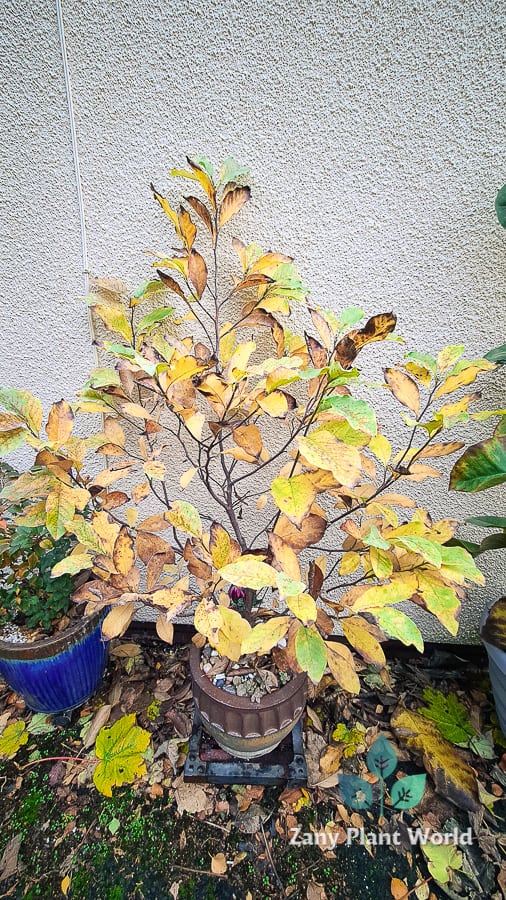
What does sulfur deficiency look like in plants?
The first sign of sulfur deficiency is pale green leaves that turn deep yellow. This is also called the chlorotic colour. You may also see stunted growth of new leaves, meaning they are shorter compared to their usual size. If you check the stem, you will also see some purple colour.
Sulfur deficiency is almost the same as nitrogen deficiency so you have to be careful in assessing which is which. My suggestion is to look at where the yellowing starts in your leaves.
Why is sulfur important for plants?
Just like the other nutrients, sulfur is very important for plants because it helps in protein synthesis and participates in the formation of chlorophyll. Having a sufficient amount of sulfur would also ensure the appropriate usage of nitrogen in your plants. Because of the bond between sulfur and nitrogen, farmers usually cure the sulfur deficiency and nitrogen deficiency at the same time.
Why causes sulfur deficiency happen?
The most common causes of sulfur deficiency are the varied pH level and macronutrient imbalances in the soil. Using fertilizers that are rich in phosphorous would also cause sulfur deficiency because phosphorous has the ability to remove sulfur.
How to fix sulfur deficiency?
To fix sulfur deficiency, make sure to use a fertilizer, organic or synthetic, that only consist of sulfur or sulfate. In this way, you can minimize the toxicity due to the increased amount of other nutrients. Additives such as potash and ammonium sulfates are commonly used in treating sulfur deficiency.
If you are growing your plants in the soil, it is better to treat sulfur deficiency using organic materials.
Signs Of Nutrient Deficiencies In Plants For Micronutrients
As mentioned earlier, micronutrients are nutrients that are not necessarily needed in huge amounts. However, do not make the mistake of considering them as non-essential.
The list below is some of the micronutrient deficiencies and how to spot them.
- The first one is copper (Cu). Copper boosts a lot of processes that occur in plants such as photosynthesis, seed production, and transpiration. When the plant lacks copper, you will see yellowing of leaves, necrosis, wilting, and stunted growth. The most notable for me is the blue-greenish foliage in some plants like vegetables.
- The second one is iron (Fe). Plants utilize iron to make important molecules and compounds such as enzymes and proteins. These enzymes and proteins are important for plant growth. Therefore, without iron, plants cannot thrive. Iron deficiency will result in pale-green to yellow or sometimes white leaves with spots of necrosis.
- The third micronutrient is molybdenum (Mo). Molybdenum is very important for nitrogen fixation. So a deficiency in molybdenum may lead to nitrogen deficiency. Remember that molybdenum is easily assessed through mature leaves. Mature leaves that have yellow margins and pale-green centres usually are molybdenum deficient. If not treated, molybdenum deficiency may lead to necrosis.
- The fourth is zinc (Zn). Zinc is a great booster for plant growth. If you see small bronze foliage, stunted shoot, and yellowing, the plant is most likely zinc deficient. The most common sign of zinc deficiency is the formation of white buds.
- The fifth micronutrient is manganese (Mn). Manganese serves a lot of purposes in plants like helping in cell duplication, creating chlorophyll, or even breathing. The signs of manganese deficiency include tiny roots, yellow linings in the veins, and necrosis.
- The last is boron (B). Boron, as borate, is used for cell duplication and the transport of sugar. Signs of boron deficiency include the witch’s broom-like shooting and a bushy appearance. Other observable signs include twisted and weak new leaves.
How to fix and prevent nutrient deficiency in plants?
Usually, foliar fertilization is the easiest option to solve nutrient deficiency. If foliar fertilization is not possible for some reason, the soil or the growing medium must be assessed thoroughly for the concern to be addressed properly.
Read more about Foliar Spray: Benefits of Foliar Feeding to Plants
Prevention and treatment for nutrient deficiency in crops depending on the element
| Nutrient | Prevention & Treatment Measures |
| Nitrogen (N) | Only use fertilizers that specifically contain nitrogen-rich chemicals. If possible, use organic fertilizers such as manure and blood meal for a longer prevention. |
| Phosphorous (P) | Make sure to always recharge the supply of phosphorous. It will be better if you can use organic materials like superphosphate and bone meal. |
| Potassium (K) | Using potash and potassium nitrate would help fix and prevent potassium deficiency. If you are into organic fertilizers, you may use wood ash, chicken manure, or seaweed. |
| Calcium (Ca) | Calcium deficiency is easily treated using calcium nitrate and lime. An easier substitute is a crushed eggshell. |
| Magnesium (Mg) | Magnesium deficiency is best addressed by using a foliar spray of liquid that contains dissolved Epsom salt. For a long-term solution, you may use dolomite to enrich your growing medium with magnesium. |
| Sulfur (S) | To treat sulfate deficiency, make use of potash or magnesium/ammonium sulfate. Keep in mind that other elements may affect the absorbability of sulfur. For the organic option, it is best to use composted mushrooms to address the sulfur deficiency. |
| Iron (Fe) | Iron deficiency is corrected by using the foliar spray. Just dilute ferrous sulfate and use it as a foliar spray. In no time, the damaged leaves will be quickly revitalized. For a long-term solution, you may use synthetic fertilizers such as EDTA, an iron chelate compound. |
| Zinc (Zn) | Zinc deficiency is easily treated by using zinc sulfate on the damaged part of the plant. |
| Boron (B) | You can fix boron deficiency using borax. Just put one tablespoon of borax in a gallon of water and spray it to the plant. |
| Copper (Cu) | Just like boron and zinc, copper deficiency is treated by spraying a diluted copper sulfate to the damaged crop. |
| Manganese (Mn) | Manganese sulfate is the most common chemical compound used in treating manganese deficiency. It is best to be used in foliar spray. |
| Molybdenum (Mo) | To treat molybdenum deficiency, put additives that are rich in molybdenum in your plants. |
Nutrient deficiency in potted plants
Plants that are planted in pots are more prone to nutrient deficiency compared to plants that are directly planted in the growing medium.
The soil in pots is usually sandy, so when fertilizer is applied, it leaches out easily which may cause nutrient deficiency.
The type of pot may also be the reason why the plants are prone to nutrient deficiency. There are pots that do not allow water drainage. In turn, some nutrients may build up at the bottom and interfere with the absorption of the required nutrients.
In general, the growing conditions can cause plants to fight for their lives just to get a taste of the nutrients they need.
How long does it take for the plant to start recovering from a nutrient deficiency?
If a plant suffers from nutrient deficiency, regardless if it is a micro or macro, the recovery period usually takes about a week. Of course, the ability of the plant to recover still depends on its environment and species. There are times when the damage is irrevocable.

ABOUT THE AUTHOR:

Zany Plant World
Succulent and Houseplant blogJoin me in exploring the beautiful and colourful world of succulents and houseplants, one plant at a time! Zany Plant World blog aims to help newbies and fellow plant enthusiasts grow healthy and happy succulents and houseplants at home. Turning your house into an urban jungle oasis that can give you the zen vibes that we all need in this crazy and busy life.