Are you wondering what is organic fertilizers? We often hear the word “organic.” We have organic food, organic shampoo, and organic waste, among others. Almost everything has the word organic these days. But let us say you want to get some organic fertilizer. What exactly is organic fertilizer? What is in an organic fertilizer?
In this context, I want you to think of “natural” instead of organic, so it will be easier, but you have to remember that not all organic fertilizers are great for your plants. Rest assured that all organic fertilizers are derived from natural sources.
Organic fertilizers are a vital source of soil and plant nutrients. The main difference between organic fertilizers from synthetic fertilizers and chemical fertilizers is that organic fertilizers give nutrients to plants while creating healthy soil simultaneously; this is why organic fertilizers are considered the ‘greener’ option.
Remember that soils with a good amount of organic matter are loosely compacted, have more significant water and nutrient retention, and are more suitable for the growth of soil microorganisms, thereby improving the plant’s and its roots’ overall health.
What is the Difference Between Synthetic and Organic Fertilizers?
Before anything else, I want to say that organic is not always better than synthetic. The opposite is true – synthetic or chemical fertilizers are not always better than organic fertilizers. It greatly depends on how your plants react to organic or synthetic fertilizers.
Let me briefly discuss the pros and cons of organic and synthetic fertilizers.
Synthetic fertilizers, also called chemical fertilizers, are more readily available than organic fertilizers. There are a lot of synthetic fertilizers already on the market. Synthetic fertilizers come in several different types depending on the plants you will use them for and their nutritional content.
In many cases, synthetic fertilizers are much less expensive than organic fertilizers. However, the nutrients may be leached into the soil by heavy rainfall or overwatering.
Synthetic fertilizers have a higher risk of burning your plants due to their fast-release feature. On the other hand, organic fertilizers are natural and considered renewable resources, so they are not readily available.
Most of the time, organic fertilizers are slow-release fertilizers, meaning they can feed your plants in the long run. Slow release may also mean that they take a couple of months or years to be broken down in the soil and be fed to your plants.
One disadvantage of organic fertilizers is that they may carry illness, seeds, or other microbial organisms if not correctly done. Another disadvantage is the difficulty of determining the number of nutrients in the fertilizer.
What are organic fertilizers made of?
Most organic fertilizers are commonly made up of rock minerals and plant and animal materials, including manure, excrement of birds and bats, dried blood, powdered bone, pulverized shells, and wood, among others.
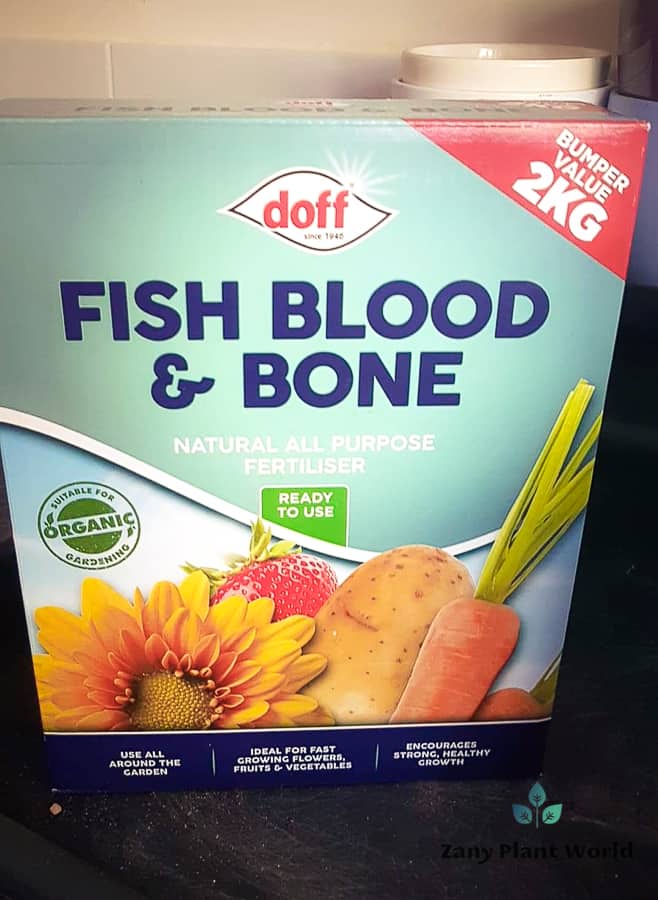
Now, some synthetic fertilizers may contain few organic ingredients. However, the main difference between the organic ingredients in synthetic fertilizers and the organic ingredients in organic fertilizers is that they act rapidly to feed the plant simply. They do not enrich the soil and may cause a build-up of toxic salts in the ground.
What do I need to look for on the label?
If you go to the market, some products include the phrase “made with organic materials” but are not organic or natural. It is very frustrating, I know. So, to be sure that you are buying an authentic organic product, look for the keywords like “100% organic”, “slow release,” and “low analysis.”
Be careful of ‘organic fertilizers’ with an N-P-K ratio of 15 or greater 15. Most of the time, these are not 100% organic.
Read more about NPK fertilizers.
List of Organic Fertilizers
The list below shows the different types of organic fertilizers based on particular sources such as animals, plants, minerals, and human wastes.
Animal Sources
- Manure. Manure can be obtained from different sources, such as horses, bats, and cows. All manure has a good amount of nitrogen and other nutrients. However, this must be prepared well because raw manure is highly acidic and might kill your plants. It is best to use composted manure to avoid the burning of plants.
- Chicken Litter. Chicken litter has chicken manure in it combined with sawdust. The combination of chicken manure and sawdust is excellent because it contains a good amount of nitrogen and potash, which are considered superior in conditioning the soil.
- Bone Meal. Bone meal is a mixture of wastes from slaughterhouses, like animal bones which are excellent sources of phosphorous and amino acids.
Mineral Source
- Rock Phospate. Rock phosphate is the most common mineral source of organic fertilizers. Rock phosphate is a sedimentary rock with relatively high amounts of phosphate minerals.
Plant Sources
- Grass Clippings. Make sure to collect the grass clippings whenever you mow your lawn. These grass clippings make a great mulch that can block the growth of weeds. Grass clippings are also nitrogen-rich, which is essential for plants to thrive.
- Weeds. Weeds also contain a large amount of nitrogen, like grass clippings. However, putting it back may lead to more weeds in your garden. So to avoid this, you have to make weed tea as a fertilizer.
To make this, fill a quarter of a five-gallon bucket with weeds, then fill the remaining volume with water. Allow the solution to stand for two weeks. After two weeks, you can use it as a liquid organic fertilizer.
- Tree Leaves. Rather than collecting the fallen leaves and bagging them, obtain them for your garden. Leaves have minerals, attracting earthworms, retaining moisture, and making the soil lighter.
Tree leaves can be used in two ways. First, crush the leaves and put them in the potting soil. Second, you can make mulch out of it to fertilize your plants and prevent the growth of weeds.
Human Wastes
You can make organic fertilizers using some of your kitchen waste. Here are some examples:
- Kitchen Scraps. For most of your kitchen scraps, you can make compost. Composts release nutrients slowly, which means that a well-composted garden is suitable for a year without the reapplication of fertilizers.
- Coffee Grounds. Coffee grounds can be used as an organic fertilizer as well. Coffee is excellent for acidifying your soil. Some plants, such as blueberries, tomatoes, and roses, thrive in acidic soil.
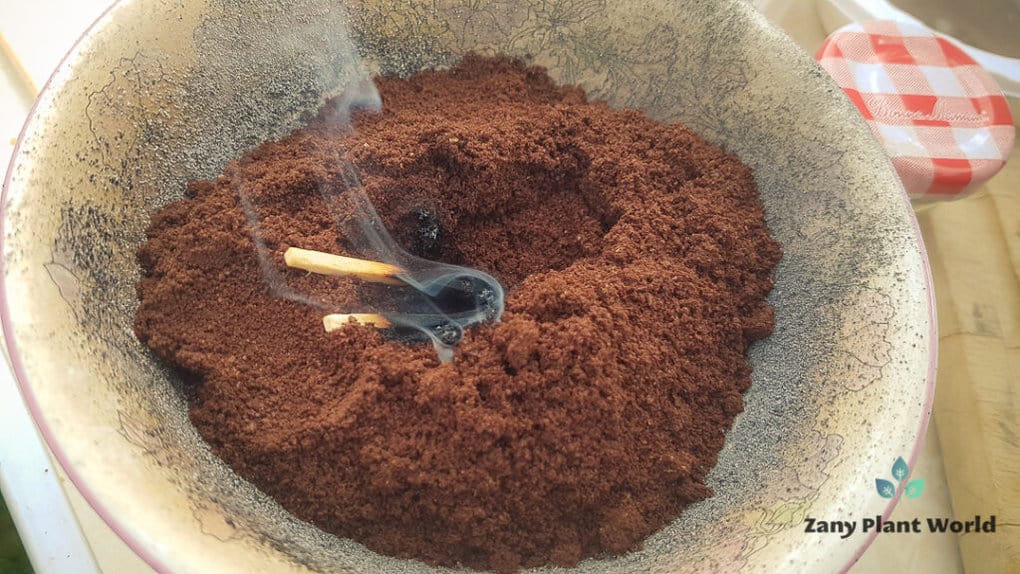
To use coffee grounds as a fertilizer, you can either sprinkle the coffee grounds over the surface of the soil or make coffee for plants by soaking six to nine cups of used coffee grounds for a week. After a week, you can spray the coffee fertilizer on your plants.
- Eggshells. Eggshells are made up mostly of calcium carbonate. Calcium carbonate mainly helps lower the soil’s acidity for your essential- to neutral-loving plants. With that, eggshells can provide plants with a lot of calcium, one of the most critical nutrients.
To make a fertilizer using eggshells, wash the eggshells, then dry them. After that, you pulverize the eggshells. Now, you can put it in your soil. I wrote another detailed article about the benefits and uses of eggshells for plants.
- Banana Peels. As well all know, bananas are rich in potassium which plants love, particularly roses! With that, you can use these banana peels as organic fertilizers.
To do it, make a hole near your plant and bury the banana peels so they can compost.
List of Sources for Organic NPK Fertilizers
The list above classified the sources of organic fertilizers according to the type of waste. In this list, I am going to show you the organic origins of the three most important macronutrients for plants – nitrogen (N), phosphorous (P), and potassium (K).
Organic nitrogen sources
- Animal manure. As mentioned above, animal manure can come from various sources, such as cows, horses, rabbits, alpacas, sheep, and llamas. Take note that you cannot use manure from cats and dogs.
Remember, manure from animals that eat meat contains a lot of bacteria that are harmful to you and your plants.
Most of the time, animal manures need to be composted before they can be used in the garden, except for readily usable rabbit manure.
Manure from other animals listed above will most likely kill your plants via burning if not adequately composted first.
- Worm castings. Worm castings are also excellent sources of nitrogen. Note that they do not need to be pure castings. Worm castings condition the soil well for your plants.
- Alfalfa meal. Alfalfa meal is the best organic source of nitrogen. Not only that, but alfalfa also activates the soil. Because of this, it is wise to use alfalfa meals with compost. Alfalfa is best for plants that consume a lot of nutrients and food, such as corn.
- Blood meal. Blood meal comes from the dried blood of animals loaded with nitrogen.
- Fish meal or fish emulsion. Fish meal is very stinky, though the unpleasant smell does not last much and is loved by plants. I like a fish meal more than fish emulsion for my plants because emulsions can be washed away easier.
- Coffee grounds. Coffee grounds are the easiest to get. If you love coffee, you have these, but if you do not, you can go to Starbucks and ask for a bag of coffee grounds. Yes, Starbucks give their used coffee grounds for free!
- Grass clippings. Call me cheap (and many do), but green grass freshly mowed from the lawn is an excellent source of free nitrogen.
Organic phosphorus sources
- Rock phosphate. Rock phosphate is one of the best, if not the best, sources of organic phosphorus because it lasts for an extended period. The only downside is that phosphorous is not readily available for plants for about a year since rock phosphate breaks down slowly.
- Colloidal phosphate. Colloidal phosphate is almost the same as rock phosphate, but it is the softer version of rock phosphate.
- Bone meal. Bone meal is obtained from dead animals. Bone meal is made up of animal bones that are pulverized. Since it is a bone, it is high in phosphorous and calcium. However, bone meal is a slow release like any other organic fertilizer. A bone meal is perfect for flowering plants.
Organic potassium sources
- Greensand. Greensand is not only rich in potassium but is also good in amending the soil. However, greensand is challenging to obtain since it is mined from deposits from the ocean floor.
- Kelp meal. Kelp meal is dried seaweed. As mentioned in the previous blog, seaweeds are great fertilizers and have a lot of benefits. Kelp meal contains a lot of minerals, as well as hormones, that allow your plants to thrive. Plants fertilized with kelp meal also have fully developed roots.
I wrote another article about seaweed fertilizers and their benefits. You can read more about seaweed fertilizers here.
- Granite meal. A granite meal is just ground granite. There are pulverized granite rocks in the market. Granite meal makes the plants healthy because it releases potassium and enhances soil drainage.
How do I use organic fertilizers?
Applying and using organic fertilizers depend upon the type of fertilizer you are using and the source of the organic fertilizer.
If you buy an organic fertilizer, read and follow the instructions carefully. Remember that some fertilizers also act as soil conditioners, so they must be applied to the ground before you plant your crops.
Few fertilizers only work or release their nutrients to the soil after a year. Some organic fertilizers are better sprayed (foliar fertilization) than put in the soil. Just know that each fertilizer has its specific and unique use and benefit.
Read more about the advantages and disadvantages of foliar fertilizers here.
Composting at Home
Composting is associated with organic fertilizers, so it is vital to know how to make compost. I made another article here if you want to know more about How to Make Compost For Plants (Detailed Guide). Composting always requires three basic things – the browns, the greens, and water.
- Browns are materials that usually turn brown after a long time. These browns include dead leaves, dried branches, fallen twigs, and big logs.
- Greens: Greens, on the other hand, are materials that are usually green in colour, such as grass clippings, fruit wastes, coffee grounds, and vegetable wastes, among others.
- Water: Lastly, water, being the universal solvent, plays an essential role in having the perfect compost.
Note that the compost pile you make should have equal amounts of browns and greens. Aside from that, the organic materials must be alternately layered depending on the size.
The brown organic materials will give your compost the carbon it needs, while the green materials will provide the nitrogen. The water will be the source of moisture that will help decompose and break the organic matter down.
Benefits of Composting
- Composting enhances soil quality. It also improves the soil’s water retention capacity and prevents diseases and pests in the plants.
- By composting, you will not need to buy artificial fertilizers.
- Composting also encourages the growth and production of good bacteria and fungi that help break the organic matter down, thereby creating humus, a material rich in nutrients.
- Composting is beneficial for the environment as well. It reduces the emission of methane, and it lowers your carbon footprint.
How to Compost at Home
There are many ways to make compost, but for this blog, I will only teach you the two most common forms of composting at home.
The first is backyard composting. Backyard composting, from the word itself, means making a compost pile in your backyard.
- Here, you must select a dry and shady place in your backyard near a water source.
- After that, you just have to add the browns brown and the collected greens. Please make sure that you chop or shred these materials.
- Then, put water to moisten the dry materials.
- Once the compost pile is done, you must put a mixture of grass clippings and other green wastes into the pile while burying the fruit and vegetable wastes about 10 inches under the compost material.
- Although optional, the last step is to cover the top of the compost with a tarp to keep the moisture intact. Once the material is darker than before, your compost is ready to use. This is usable after a couple of months or years.
The second most common type of composting is indoor composting. This is good for gardeners that do not have a considerable place for outdoor composting.
What you need is a bin that can be covered. The volume depends on how much compost you are trying to make. Like in backyard composting, you must alternately layer the browns and the greens. You also have to take note of what you put in the pile.
If you do it properly, this indoor compost should not attract pests or smell bad. This composting makes a ready-to-use organic fertilizer for about two to five weeks.
What are the benefits of using organic fertilizers in plants?
There are a lot of benefits of using an organic fertilizer aside from the usual benefits of fertilizer. The list below shows the benefits that are unique to organic fertilizers:
Organic Fertilizers Stay Longer and, Therefore, Work Longer.
Organic fertilizers work for a more extended period than synthetic fertilizers because they give nutrients to the plants and tend the soil.
Organic Fertilizers Have a Balanced Content.
Organic fertilizers give a well-balanced diet and nutrients vital for the beneficial microorganism in the soil. These organisms are one of the causes of healthy soil. When the soil is healthy, plants absorb the nutrients more effectively.
Organic Fertilizers Offer a Wide Variety.
Because of its benefits, organic fertilizers are offered in different varieties targeting specific crops and soil conditions, among others. Organic fertilizers can be obtained from natural wastes, fish liquids, biomass products, seaweeds, etc.
Organic Fertilizers are Environmentally Safe and Friendly.
Organic fertilizers are safer because they are not as concentrated as chemical fertilizers, making organic fertilizers the best fertilizers for crops. Using organic fertilizers will not cause too much pollution.
Organic Fertilizers Eliminate Contaminations.
Using organic fertilizers decreases the risk of harmful contamination in the surroundings, such as surface water contamination. The organic materials help degrade other substances in the soil, which enriches the soil. In addition, overfertilization is nearly impossible when using organic fertilizers.
Organic Fertilizers are Full of Nutrients.
Unlike chemical fertilizers that give plants only primary nutrients, organic fertilizers give more than micronutrients. Organic fertilizers do not only provide the N-P-K (nitrogen, phosphorus, and potassium), but they also provide adequate levels of trace minerals.
Organic Fertilizers Enhance the Condition of Soil.
Organic fertilizers enhance the soil by decomposing, which increases the ability of the soil to hold water and essential nutrients for a long time.
Organic Fertilizers are Cheap
Organic fertilizers can save tons of money for farmers and gardeners. Even simple people can make fertilizers for their gardens.
Organic Fertilizers are Easy to Use
Organic fertilizers are easy to use and do not need special equipment or instruments. Using organic fertilizers does not require expert knowledge as, well.
Organic Fertilizers Can Produce a Higher Yield
According to most farmers, the efficient use of organic fertilizers in farming can give a more significant percentage yield. A lot of farmers enjoy the benefits of organic fertilizers for their plants.
Remember that organic fertilizers are renewable and, therefore it is sustainable. Organic fertilizers also give a continuous flow of nutrients that can restore the depleted nutrients in the soil.
Sustainability benefits the environment by using organic fertilizers.
This kind of fertilizer offers sustainability for an extended time. If you notice, the environmental changes are long-term and most of the time occur slowly, which is what organic agriculture considers.
By producing organic fertilizers, organic agriculture aims to create food and enhance gardening while maintaining an ecological balance. In this way, soil fertility and pest infestation can be prevented.
In simple words, organic agriculture takes a proactive rather than a reactive approach, like treating problems after they occur.
The list below is the problems that organic fertilizer helps tackle:
- Organic fertilizers can help in food security. Since fertilizers made from organic materials increase the yield of crops, more food can be provided, thereby contributing to the food security we need.
- As the population increases, the demand for food also increases. This is why we must protect the soil where the food we need is grown. Forty per cent of the Earth’s surface is used for agriculture. Therefore, it is essential to use methodologies that respect soil diversity. One way to do that is to use organic fertilizers.
- Organic fertilizers have rich organic materials that can improve soil’s biological activity, enhancing and sustaining biodiversity. In simple words, organic fertilizers help perform critical ecological functions.
- Organic fertilizers have vast potential to develop a low-carbon economy. The organic matter present in organic fertilizers can help transfer atmospheric carbon dioxide into the soil and impede its emission back into the atmosphere.
- Organic fertilizers increase crops’ resiliency, which is very important nowadays because of the extreme temperatures, which are stressful conditions for plants and other crops. Organic fertilizers also enhance water efficiency, making the plant more robust and resistant to drought.
- Organic fertilizers maintain the soil’s organic materials for an extended period, thereby improving the health of the soil. The organic matter in the soil enables the healthier soil to hold water more effectively, making it erosion and leaching-resistant.
- Since organic fertilizers can minimize leaching, it is also safe to say that organic fertilizers can reduce the negative impacts of farming. Know that organic fertilizers are excellent sources of carbon that enhance fertilizer efficiency.
Disadvantages of Organic Fertilizers
Not All Organic Fertilizers Are Created Equally
Most organic fertilizers are not the same. Since the materials are natural, the number of nutrients cannot be predicted. This means that organic fertilizers may produce inconsistent results.
The Nutrient Levels in Organic Fertilizers Are Low
The number of nutrients in an organic fertilizer is more often low than in synthetic fertilizers. Moreover, the nutrients are complex, so organic fertilizers take time to break down. Remember, the application of organic fertilizers is a process. It is not an event.
DIY Composting is Difficult.
Yes, you can make your fertilizers, but it is a complicated process. This complication often leads to inconsistency not just in practice but also in the result. As mentioned before, organic fertilizers may not have consistent nutrients.
Homemade Organic Fertilizer Recipes
To conclude this blog, I include some easy recipes for making organic fertilizers that I personally use. Once you have tried it, please give me feedback about it 🙂
- Vinegar Fertilizer Recipe
Vinegar has acetic acid, which plants that grow well in acidic conditions love.
To make this, pour one tablespoon of white vinegar into a gallon of water, then shake well. You may apply this solution to your plants every three months.
- Banana Peel Recipe
Banana contains potassium. You may use this recipe, particularly for roses.
To do this, put the banana peels in a hole near the soil where you are planning to plant your roses. You can also bury the peels under mulch. Banana peels improve the fertility of the soil which results in bigger and better blooms. Your rose would definitely have a more vibrant colour.
- Worm Casting Recipe
Making a fertilizer out of worm casting is very easy. To do this, just mix wriggler worms with your kitchen scraps (or compost). Let the mixture stand for a week then apply it to your soil.
ABOUT THE AUTHOR:

Zany Plant World
Succulent and Houseplant blogJoin me in exploring the beautiful and colourful world of succulents and houseplants, one plant at a time! Zany Plant World blog aims to help newbies and fellow plant enthusiasts grow healthy and happy succulents and houseplants at home. Turning your house into an urban jungle oasis that can give you the zen vibes that we all need in this crazy and busy life.