Are you wondering about the benefits and use of eggshells for plants? If you have read my post about organic fertilizers, you know how much I love turning kitchen waste into valuable things like fertilizers. As a person who likes eating eggs – whether eggs with soldiers, fried eggs, scrambled eggs, or poached eggs – I get a lot of waste from eggshells. So, I looked for a way to make it worthwhile by putting it in my garden. Let me share it with you.
Eggshells that have been made into eggshell fertilizers are rich in calcium carbonate. Calcium carbonate is a mineral that is essential for fortifying plants’ cell walls. The eggshells also contain potassium, phosphorus, and magnesium. These three nutrients aid in plant growth. Therefore, eggshells are a valuable and very affordable fertilizer for indoor plants and outdoor garden soil.
Read more: Organic Fertilizers: What, Why, and How it is Beneficial for Plants.
Are eggshells good for plants?
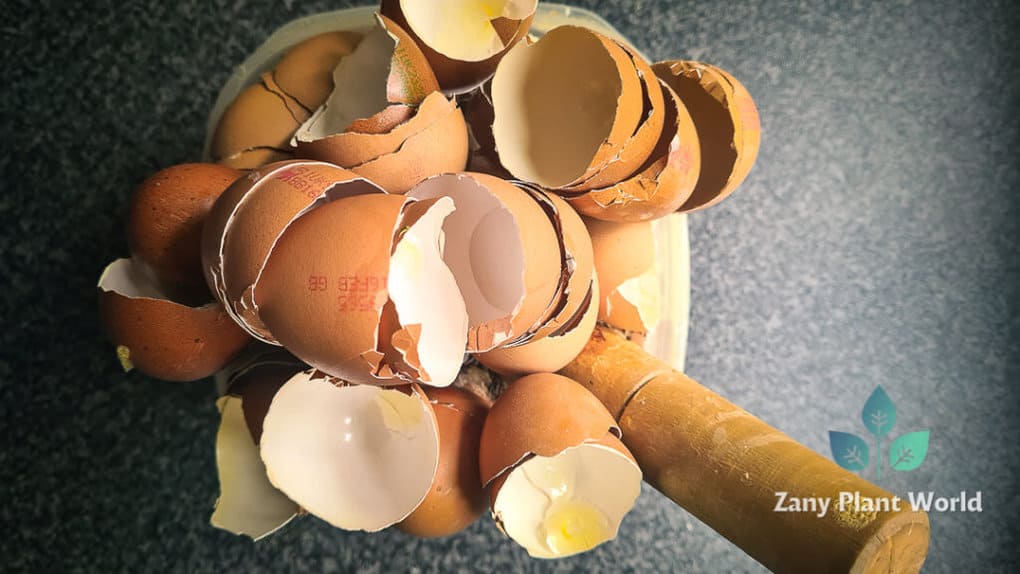
Yes, eggshells are good for plants. Most gardeners frequently utilize chicken eggshells because of their high calcium content. Just like how humans need calcium to develop and maintain healthy bones, calcium promotes plant development by giving cell walls structural support.
Do eggshells make the plant grow faster?
Yes, eggshells do indeed hasten plant growth. Eggshells encourage the formation of roots, which causes plants to grow more quickly. Eggshells’ calcium carbonate helps a plant’s roots get more vital to develop more rapidly and robustly.
Aside from root development, plants benefit significantly from eggshells which we will discuss in this post.
Does Eggshell Fertilizer Work for All Plants?
A lot of plants benefit from eggshell fertilizers, but not all. Fruit-bearing plants and vegetables, including apples, lettuce, and eggplants, can benefit from eggshell fertilizer. Additionally, it will increase the growth of several annual and perennial flowers, like marigold, begonia, cornflower, and vinca. Eggshell fertilizer is also beneficial for succulents. However, some succulents could need nitrogen.
So, what are the plants that may suffer from eggshells? Certain indoor and outdoor plants will suffer from the additional calcium in eggshell fertilizer. Most acid-loving plants do not like supplemental calcium in their systems, such as beech, willow, geraniums, rhododendrons, violets, azaleas, and daffodils.
What are the nutrients found in eggshells?
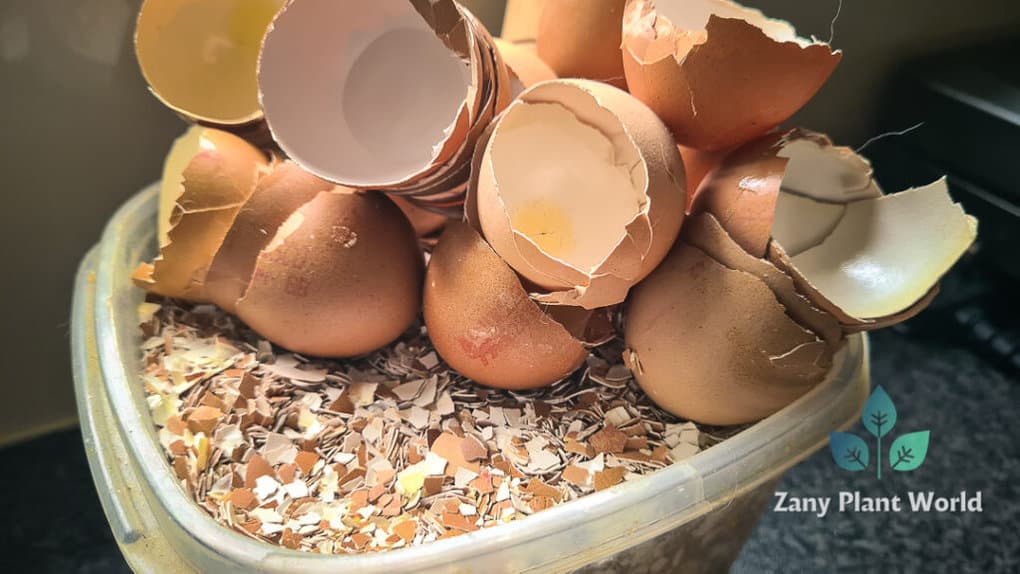
Before we discuss how to recycle this wide range of food waste in the garden, I believe it would be good to look at what is being discarded for almost a million pounds daily.
An average eggshell is composed of
- calcium carbonate, around 95%
- phosphorus, about 0.3%
- magnesium, approximately 0.3%
- Traces of sodium, potassium, zinc, manganese, iron, and copper.
So, imagine throwing away all those nutrients? It seems so wasteful.
Research shows that eggshells are just as effective as agricultural lime. Agricultural lime is a commercial product with calcium carbonate contents ranging from 48% to 97%.
You should know that gardeners are not the only ones who use this kind of food waste as a DIY modification. Even manufacturers or producers use eggshells in making fertilizers. According to the North Carolina Extension Gardener Handbook, eggshell is listed as an organic fertilizer that is acceptable for commercial organic farmers. Eggshells used commercially has an average NPK ratio of 1.2-0.4-0.1.
The lesson here is that what is typically treated and dumped as waste can be an extraordinary supply of calcium, with value as an amendment to feed plants and counteract acidic soil. Eggshells also offer relatively low levels of nitrogen, phosphate, and potassium.
Benefits of eggshells for plants:
Eggshells can benefit plants in the following ways:
1. Great supply of calcium carbonate. Unsurprisingly, eggshells can supply the amount of calcium carbonate the growing medium requires.
2. Reduce acidity. Eggshells can reduce the acidity of the soil. Remember that many plants need slightly acidic to almost neutral pH conditions to absorb nutrients and fend against harmful substances like aluminium and fluorine. Eggshell calcium carbonate increases the soil’s pH, making the soil or growing medium more alkaline.
3. Prevention of blossom-end rot. Eggshells guard plants and fruits against blossom-end rot. Please know that some fruit-bearing plants occasionally have black spots on their fruits due to the tissue breakdown caused by calcium deficiency. Blossom-end rot severely impacts the plants and affects their overall yield.
Read more: How to Identify and Fix Nutrient Deficiency in Plants
4. Management of pests. Eggshells can be used to manage problems in your garden. You can keep a deer away from your garden using eggshells. Deers hate the odor of eggs; therefore; as a result, they will stop nibbling on your plants.
Insects will also not be drawn to your plants because of the rough, jagged edges of the fractured shells. Because of this, the plants are making them less likely to be invaded.
5. Maintains soil pH. Many chemicals, such as calcium carbonate, assist in keeping the pH of the soil at appropriate levels to encourage their growth and long lives. Calcium carbonate strengthens the cell walls of plants which promotes rapid development.
6. Encourage root growth. Eggshell’s calcium carbonate strengthens the roots of the plants allowing them to develop faster and more robustly.
To do this, you have to clean and dry the eggshells. Then, the eggshells should be grounded into a fine powder. After that, pour boiling water into the powdered eggshells. Next, the mixture should be covered and kept in a refrigerator for a week with only one daily stirring. After seven days, pour the cross above the plant’s roots into the soil.
Uses of Eggshells in the garden
How do we use eggshells in the garden you ask? We can use eggshells in a lot of ways.
1. Eggshell as fertilizer. Ground eggshells, incorporated into the soil, give your plants calcium.
While phosphorus, nitrogen, and potassium are also crucial for the healthy growth of plants, calcium is also necessary for constructing strong “bones” or a plant’s cell walls. Now, eggshells are a great way to add calcium carbonate to the soil because they contain this mineral.
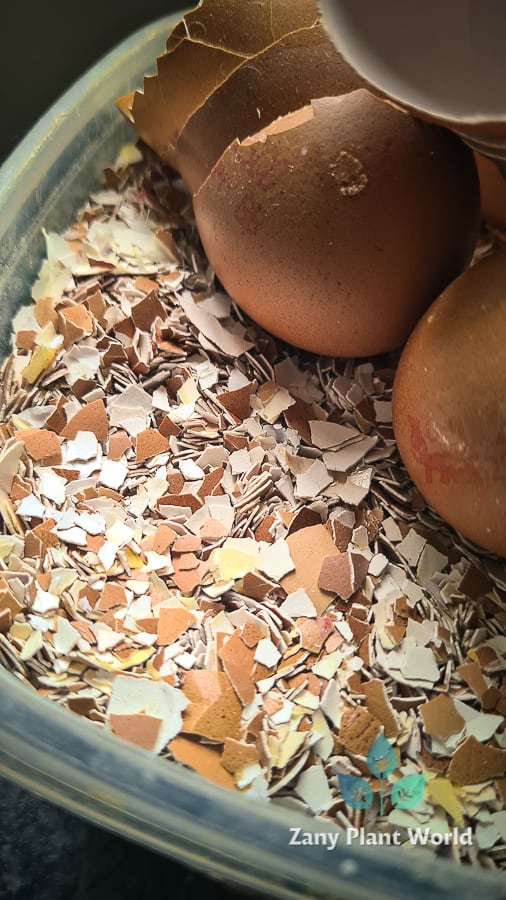
You can prepare the eggshells by grinding them using a mortar, pestle, blender, or grinder. It is advised many gardeners plough eggshells into the soil in the fall. Remember, it takes a while for them to decompose and be absorbed by a plant’s roots. If you put them in the fall, you can amend your soil with more shells in the spring.
Newly planted plants will flourish when surrounded by finely crushed shells and other organic matter at the bottom of a hole. You can try combining your eggshells with coffee grounds rich in nitrogen for an intriguing recycled garden drink.
Eggshells will also aid in the aeration of your soil and lessen its acidity.
2. Eggshell for seed starters. Eggshells are excellent no-waste seed starters because they are biodegradable. To do this, set aside the eggshells from your dishes or breakfast. Then, you must sterilize them by boiling the shells or baking them at 200 degrees for 30 minutes.
After the eggshells were sterilized, create a drainage hole in the bottom of the container using a nail or awl. As directed on the container, add the soil and the seeds. When sprouts appear, immediately plant them in the ground, egg and all.
3. Eggshell for pest control. Crushed eggshells are supposed to help keep various big or small pests away from gardens. Because the albumen smells bad, deer and other four-legged animals avoid it.
Therefore, you can use an egg’s interior to scare away deer. Now, although deer hate the smell of eggs, rats, on the other hand, adore it. You have to keep that in mind. With that, placing eggshells next to the house might not be the best idea.
Many gardeners recommend using crushed eggshells to deter snails and slugs. However, recent studies show that this is not true. I have not tried this, so I would be interested to know if you have used eggshells as a slug deterrent with any effectiveness.
4. Eggshell for bird food. Like plants and people, birds also benefit from a small amount of calcium in their diet, especially female birds, which require more calcium before and after egg-laying.
These birds cannot fully digest eggshells and consume calcium, so most of the time, their manure still contains eggshells. As mentioned in the previous post, animal manure is an excellent organic fertilizer.
To use eggshells for bird food, you have to sterilize the shells by placing them in a cooling oven after baking a meal. Then, pulverize them into little pieces and combine them with your preferred seed.
5. Eggshell as mulch. Eggshells make a dramatic accent in the garden, similar to oysters. You can apply a thick coating to remove weeds if you gather enough materials. Eggshells may even be added to seaweeds to make a perfect organic fertilizer.
Read more: Benefits and Uses of Seaweeds For Plants
6. Eggshell to improve the container’s drainage.
All gardeners know that good drainage is crucial for container gardens and any potted plant. Now, eggshells can also be a great tool to improve drainage. Also, eggshells enhance ventilation and circulation to roots, which are crucial for nutrient uptake.
To improve drainage using eggshells, the eggshells should be coarsely crushed. Pulverized shells should line the bottom of your pot or container for about an inch. However, the depth will still depend on the size of your pot.
Two to three inches or more drainage material for large containers is enough. For small pots, perhaps only a quarter to a half inch is necessary. It is crucial for pots without drainage holes to provide adequate flow for any extra moisture and a water reservoir.
The thickness of the eggshells makes effective drainage materials, and when they break down, the eggshells can replenish the soil with vital nutrients. Remember to use new eggshells every year and replace them whenever you repot your plants in your gardening containers.
7. Eggshell for soil aeration. Delicate eggshells or coarse-ground eggshells are added to garden or container soil to increase airflow. This will help promote ventilation and oxygen supply, which are essential for root health and nutrient delivery, and will be helpful to your plants.
How to prepare eggshells as a fertilizer and compost
There are two ways to prepare an eggshell fertilizer.
Eggshell Water Fertilizer
Both the ingredient list and the recipe are straightforward to follow. You may create eggshell water fertilizer by following the steps below.
- First, boil one gallon of water.
- Second: Fill the water with ten dry, clean eggshells.
- Third: Soak the shells in the water all night.
- Fourth: Drain the water and remove the shells.
Those are the four simple steps to make an eggshell water fertilizer. You can pour the milky-looking water directly onto the plant soil for a nutrient boost. It is recommended to use about two cups of the mixture.
Do this only once a week to avoid toxicity. The great thing is that this method of using eggshell water works well for outdoor and indoor plants. Eggshell water can also be stored in a closed container at room temperature for later use.
For better results, you may also try the foliar spray. Here, instead of pouring the fertilizer directly into the soil or growing medium, you will put it on the leaves using a spray. This allows faster absorption of nutrients.
Read more: Foliar Spray: Benefits of Foliar Feeding For Plants.
Powdered Eggshell Fertilizer
Another way to make an eggshell fertilizer is to make a powdered one. There are two ways to make a powdered eggshell fertilizer.
1. Wash, rinse, and dry the eggshells. Once dry, crush the eggshells. Grind the eggshells into a fine powder using a rolling pin, food processor, mortar, and pestle. Make sure to wear a mask to prevent inhaling eggshell dust when crushing the shells. Now, put the eggshell powder into the soil of your vegetable garden, indoor plant potting mix, or flower bed.
2. Grind the eggshells. Without a food processor or manual tools, you can use a manual coffee grinder to turn eggshells into powder. Add the ground eggshells to your compost bin to make mulch, or you can also pour them directly into your planting holes. Many gardeners add coffee grounds to eggshell fertilizer for an even more nutrient boost. Remember that coffee grounds are rich in nitrogen and potassium.
I wrote another article about How to Make Compost For Plants (Detailed Guide), I encourage you to read it to learn more about composting.
Do you need to wash eggshells before composting?
Yes, it would be best to clean the eggshells thoroughly before composting to avoid contamination. Remember that eggs are known carriers of salmonella. With that, salmonella may be present in uncracked eggs. So before I put them in the compost, I rinse the eggshells well and let them dry on a sunny windowsill.
If you wish to store ground eggshells that are safe for your plants and your dogs to consume (Yes, the eggshell powder is used as a calcium supplement for dogs, too!), sterilize them in a 200°F (93°C) oven for 30 minutes. The dryness should kill any salmonella present.
How long does it take before the eggshells break down in soil?
Eggshells are considered slow-release fertilizers. This means that eggshells take a long to release their nutrients to the soil or any growing medium.
If eggshells are finely crushed and added to acidic, microbial-rich soil or growing medium, they take between 5 and 10 years to break down completely. However, eggshells do not quickly decompose in normal circumstances and can be visible in the soil for almost 100 years. They have also been discovered completely intact in archaeological investigations.
Large eggshell chunks will take at least a year to decompose (yes, it is just the start), making their stored calcium plant available perhaps during the next growing season. Eggshells reduced to a fine powder produce the fastest results.
Why Do Eggshells Not Decompose?
Eggshells don’t seem to break down, or at the very least, it would take many lifetimes to see the process.
The major component of eggshells is calcium carbonate (CaCO3), a stable mineral molecule. Although eggshells easily split into smaller pieces due to their brittleness, it does not quickly release their constituent parts.
Because of this, the calcium molecules in eggshells are not water-soluble and must be dissolved in an acidic solution. The shells are unaltered in the absence of an acidic chemical reaction.
In actuality, eggshells in a compost bin stayed unaltered throughout a recent 5-year study.
Do eggshells raise the PH of the soil?
If your soil’s pH is low, it is said to be acidic. For many vegetable and fruit-bearing plants, this is a concern. Some plants perform better in acidic soil than others, and those that do not will suffer unless you raise the pH of the environment and lessen the acidity of your soil.
Eggshells can also assist you in doing that!
Spread a thick coating of finely crushed, coarsely crushed, powdered, or pulverized eggshells over the area and incorporate them into the soil to raise the pH of the soil. Place the shells in the dirt a few inches deep.
Keep in mind that it takes time for the eggshells to break down, but the soil’s pH should improve over time.
Due to the difficulty of saving enough eggshells to treat an entire garden, this method is best suited for more minor or targeted treatments.
Now, if you have a great source of eggshells, you may do this for more expansive areas. If you do not have one, you can use lime. Lime is a more accessible application for huge gardens. Reducing the acidity of your soil using lime takes roughly the same amount of time.
Read more: pH Water Levels for the Plants: Definition, Benefits, and Effects.
Do eggshells attract other pests in the garden?
Yes, eggshells attract pests in the garden! Remember that eggshells are excellent sources of organic matter and phosphorus. However, it takes a while for them to decompose and benefit the soil. Before adding them to the soil, always give them a good rinsing. Wash them thoroughly, then dry them because rodents may be drawn to the garden by egg leftovers.
The shells may be crushed and recycled in your compost pit, and the more beautiful and aromatic coffee grinds may be added to the soil of your garden or any other growing medium.
What are the disadvantages of using eggshells in your garden
Eggshells may offer particular advantages, but they will not fix all of your problems in the garden.
1. Eggshells are proven not effective in killing slugs. Despite some gardeners’ theories to the contrary, there is no proof that eggshells genuinely work as pest management. Slugs and other pests or animals may be afraid of the sharp edges of eggshells. However, this does not mean eggshells are natural pesticides or insecticides.
2. Eggshells are very slow to break down. Eggshells might take several years to degrade and be used by the plants thoroughly. Although the process can be sped up by finely breaking the shells before adding them to compost or soil, you cannot anticipate immediate effects.
3. Eggshells do not always prevent or fix blossom end rot. Blossom end rot in fruits like tomatoes can be a sign of calcium deficiency, but it does not always mean that your soil is calcium deficient. You should know that blossom end rot is more frequently brought on by inconsistent watering. Inconsistent watering hinders the plant’s ability to transfer nutrients like calcium through its systems.
4. Eggshells can interrupt root systems. Even though I said eggshells could improve drainage and develop the roots, they can also interrupt them. Ensure any eggshells below the soil’s surface are finely pulverized to prevent any disturbances. If not, the substantial fragments might prevent root growth.
Plants that do LIKE eggshells:
If you want to use eggshells, be careful. You need to know if your plants love them or hate them. It is also essential to assess the needs of your soil. Here are the plants that love eggshells.
- Tomatoes
- Peppers
- Eggplants
- Broccoli
- Cauliflower
- Swiss chard
- Spinach
- Amaranth
- Apples
- Carrots
Plants that DO NOT LIKE eggshells:
Some plants hate eggshells for some reason. It may be because they do not need too much calcium. Sometimes, the soil also affects the plant’s response to eggshells. When added to eggshells, soils that are already rich in calcium, when added with eggshells, will have too much calcium, which may result in toxicity.
There is also a tendency for plants to absorb all calcium and not the other minerals which may lead to nutrient deficiency.
Some examples of plants that do not like eggshells are spinach, beans, cabbage, and kale.
ABOUT THE AUTHOR:

Zany Plant World
Succulent and Houseplant blogJoin me in exploring the beautiful and colourful world of succulents and houseplants, one plant at a time! Zany Plant World blog aims to help newbies and fellow plant enthusiasts grow healthy and happy succulents and houseplants at home. Turning your house into an urban jungle oasis that can give you the zen vibes that we all need in this crazy and busy life.
Would adding some vinegar to the soaking water release more nutrients from the eggshells?