Have you ever wondered why succulents grow leggy and tall? It is when the beautiful rosette-shaped succulent suddenly stretches out with big gaps in between the leaves.
The succulent loses its rosette shape and grow tall. I have been growing succulents now for a few years and one of the prevalent problems that the newbie succulent growers have asked about.
Succulents grow leggy and tall because they are reaching for more light. This occurrence is called Etiolation. Succulents natural habitat is the arid dry desserts where sunlight is abundant. Since they are naturally a sun-lover, they would prefer to have a good amount of sunlight a day. As a good rule of thumb, try to provide at least 6 to 8 hours of natural daylight or grow light to your succulents to prevent them to grow tall and leggy.
Let’s dive more into the cause and other factors on why succulents grow leggy and tall. I will be sharing some more tips on how you can fix leggy succulents to make them look compact again.
What is Etiolation?
Etiolation happens when a plant is grown in a partial low light or no light environment. It is the plant’s adaptation to reach the light source to photosynthesize and create more food. Due to the lack of light and food, the plant’s growth is compromised.
As an effect the plant grows with elongated leaves and stem pale-looking pigments, wide apart internodes, and weak immunity to diseases and pests.
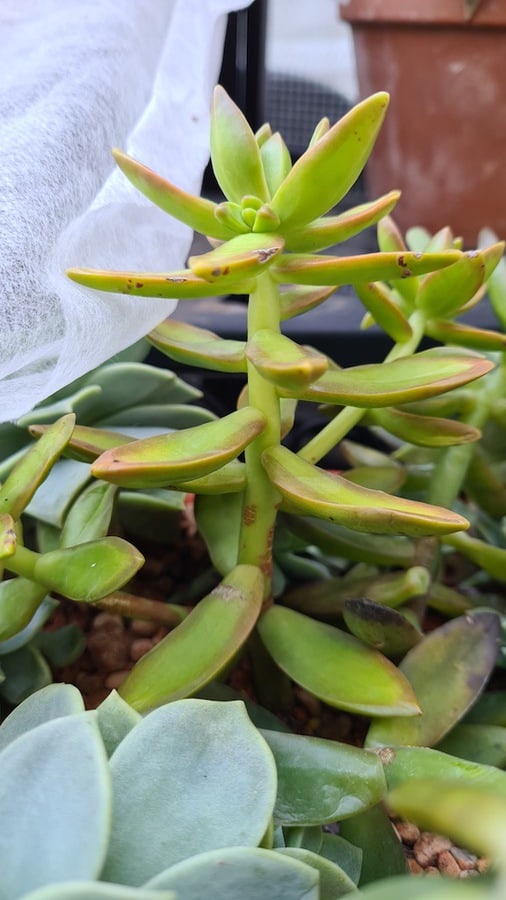
Etiolation is a common occurrence on succulents most especially if they have grown in the shaded part of the garden. Newbie succulent growers typically have their succulents inside their homes as a houseplant the lack of enough light causes the succulents to etiolate.
Read more: Why Succulent Leaves Turn Yellow or Brown?: Causes and How to Fix them
Are succulents supposed to grow tall?
Some succulents grow tall as their natural growth habit. Mainly the rosette-shaped succulents should remain compact and maintain their rounded shape. The hanging type succulents’ internode should remain close to each other and maintain their leaf shape.
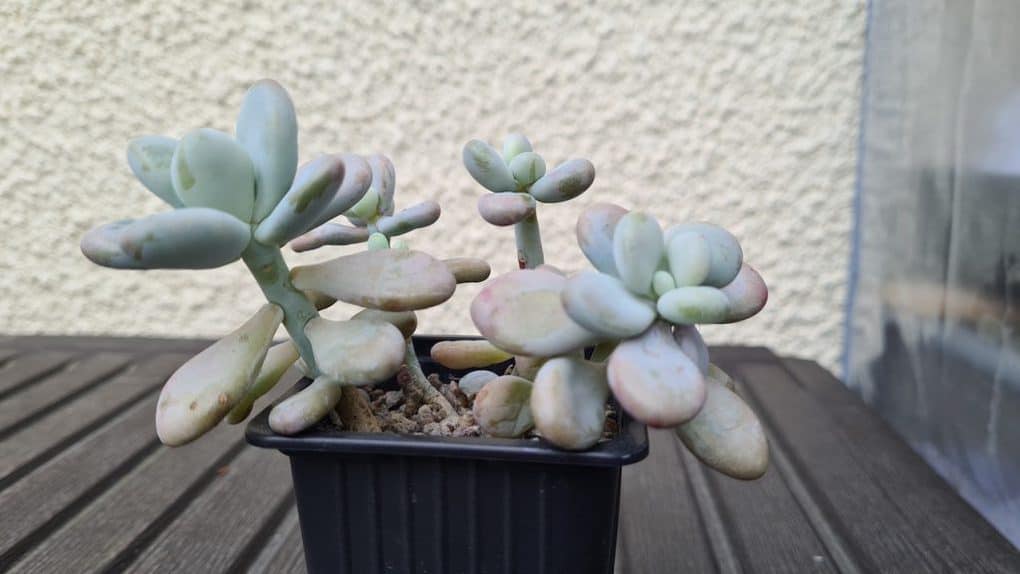
Graptopetalum succulents naturally grow leggy and tall, however, the rosette at the tip of its stem should remain compact and maintain its rosette form. If you notice a big gap between the leaves and nodes, this could be a sign of etiolation. Graptopetalum is notorious for growing leggy once its natural light requirement is not met.
How much light does the succulent need?
Based on my personal experience with growing succulents, over the years I have noticed that giving enough light is the key to making your succulent compact, stressed and Instagram-worthy! I wrote another article about Light requirements: How much sunlight do succulents need?
As a rule of thumb, Succulents prefer to have at least 6 hours of daylight with the right intensity to keep them happy. I use the mobile app called, Light Meter to help me initially determine how intense is the light in the current place where my plant is.
The ideal light intensity for succulents is around a minimum of 3000 Lux (lx) or 279 Foot Candles (FC) for at least 6 hours a day. If you are growing your succulents outdoors in the garden, it is ideal to have the morning sun for the succulents so they won’t get sunburned.
How do I fix my leggy succulents?
Fixing a leggy succulent is easy. You have a few options to take to correct the way your succulents behave and achieve the original compact look of the plant. Here are some ways that you can correct and fix your leggy succulents.
1. Chop and Propagate
When succulents stretch, you will notice that there is a wide gap between nodes and their leaves. The crown part of the succulent is still compact and have its rosette form. This is a great opportunity to cut the plant near the crown part and propagate it as a fresh cutting.
The remaining part of the succulent can also be propagated. I personally have the main stem in its original pot and still, take care of it as I would on my succulents. Eventually, the main stem will also shoot new succulent offsprings.
2. Do some leaves propagation
Another way to fix your leggy succulents is to use the leaves from the stretched part for leaf propagation. I made a post on how to propagate succulents and this is one of the methods that I personally use.
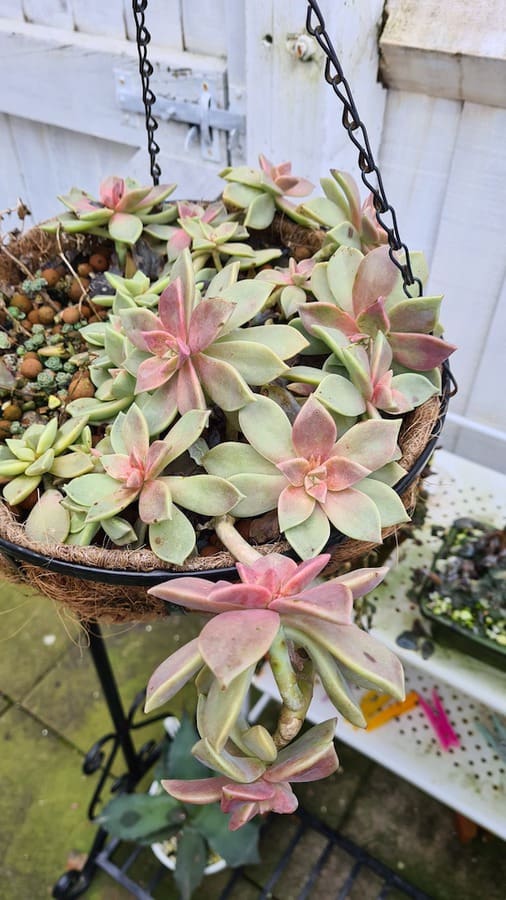
This method will give your succulent a long stem look, I personally like this look on Graptopetalum succulents, most especially on Graptopetalum paraguayense (Ghost Plant).
3. Give more light
One of the easiest ways to fix leggy succulents is to give it more light than it needs. Giving the succulent the right amount of light that it needs makes them grow more compact and happy.
Provide at least 3000 Lux (lx) light intensity for at least 6 hours a day, some succulents would prefer to have more light than this due to their natural growth habit.


If you are growing succulents inside your home, you can provide quality grow lights for your succulents to help them to thrive in an indoor environment.
4. Move your plant to a brighter spot
Another quick and easy fix for leggy succulents most especially when they are outdoor is to move them to a sunny spot. This is easy when you have a container garden and you can just swap them around in different locations where they can get more sunlight.
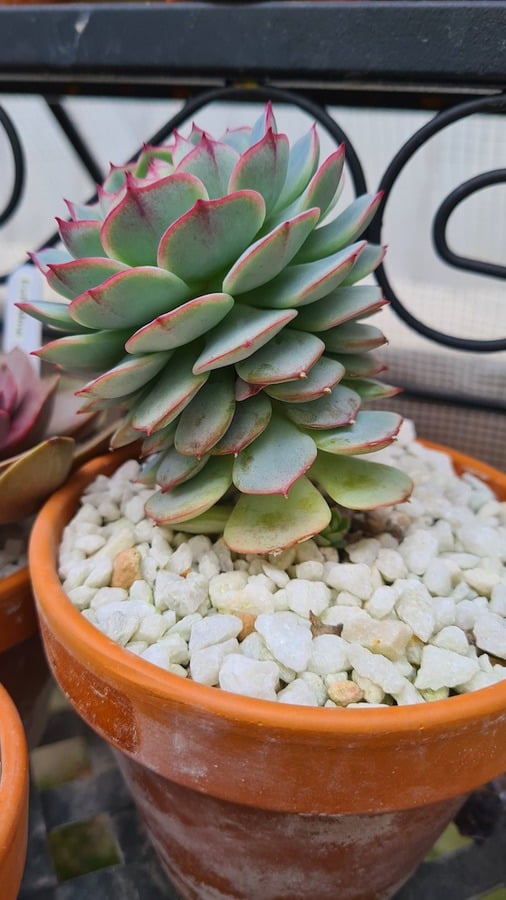
Morning sun is ideal for succulents. If you happen to have sunlight all day in your garden, it is recommended that you train your succulents to a great amount of sun exposure that will receive and do not immediately place them directly under the sun.
Exposing the succulents to direct sunlight without helping or training them to adjust will cause sunburn on your plant.
5. Give a low nitrogen fertiliser
Giving a low nitrogen fertiliser for your succulent is ideal to stop them from growing leggy and tall. The low nitrogen fertilizer will help the succulent to keep its beautiful compact form. I personally use Chempak fertiliser for succulents and cacti.


Nitrogen helps to develop and support the foliage and fast growth for your plants, however, this is not the case for succulents. Promoting more nitrogen than what the succulents need can result to grow taller and etiolate. I wrote another article here that discusses succulent fertilizers and NPK.
Succulents natural habitat and ideal growing conditions are the arid environments. Hence, it is not really a big deal if the succulents will be given a low nitrogen fertilizer.
I hope that this post helps you understand more about why succulents grow leggy and how to fix it! Let me know some more succulent care tips on how to prevent your succulent to grow tall in the comment box below.
Happy growing!

ABOUT THE AUTHOR:

Ryazan Tristram
Succulent and houseplant collectorI’m Ryazan, confessed succulent-holic and proud plantita (plant mom) based in Birmingham, UK. Proud succulent hoarder for a couple of years now and my collection keeps growing! Let me help you to turn your home into a succulent and houseplant oasis that you will love!