Are you wondering how much sunlight do succulents need? When we see or hear the word “succulent,” we often think of a desert-dwelling plant. However, it is essential to know that the word “succulent” encompasses various plants found in their natural habitats all over the world. Most of them are found in deserts, but some of them can be found in rainforests.
That is why figuring out their needs, such as the amount of sunlight they receive, varies. It is not a size-size-fits-all kind of thing.
Like other living things, succulents need a certain amount of sunlight to thrive. They grow by turning light into energy through photosynthesis. So, if you plan on growing succulents indoors, providing a sufficient amount of light can be challenging.
If your plants do not receive the right amount of light, they will not grow in the best shape; just like humans, those who do not receive enough sunlight or energy become weak. With succulents, when they are not exposed to proper light, they start stretching out and may grow leggy and tall through a process called etiolation.
As a golden rule, succulents must get around six to eight hours of sunlight daily. However, this can change depending on the species of your succulent. Most succulents love direct sunlight. Some prefer indirect sunlight.
So if you want to know what is best for your succulents, make sure to read the guidelines below.
Read more: Etiolation: Why Succulents Grow Leggy And How To Fix It.
Can succulents grow indoors?
Yes, succulents can grow indoors. There are a lot of succulent species that have become “home buddies” and have adapted to thriving indoors. This is why succulents became very popular. Remember, any species of succulent can be kept alive indoors, but their growth might be stunted when their needs are not given.
Lighting is the most important thing to consider if you plan to grow succulents indoors or other plants. It is vital to consider the locations in your house where you can put your plants. You have to take note of the type of plant you have, where they came from, and light requirements, among others.
Ideally, the best location where you can place your plants is the area where your plants will receive sufficient and consistent lighting. Remember, the Earth revolves around the sun, so you must consider the amount of lighting and the type of lighting the spot in your house receives throughout the day.
The amount of sunlight your plants get is significant. Remember that direct sunlight that comes through a window is not the same as direct sunlight outside in intensity. As you move the plants away from the window, the intensity of the light lessens.
When talking about the types of lighting indoors, you have to remember three terminologies:
Bright — Bright light means no obstructions between the plant and the window, such as curtains or blinds. The sunlight is shining directly on your plant through the window. On the other side, there should be no obstructions between the window and the tree, such as posts, shrubs, and houses.
Filtered — Filtered light means that the light is not directly hitting the plants. It could mean that it is partially screened. In the filtered sun, you will be sure that your plants will get sufficient sun exposure without the risk of being overexposed to sunlight.
Shady — Shady light means low light. In other words, there is no direct sun or any different light. The light is blocked by the object before it passes through the window. Usually, plants that need shady areas also need high humidity.
Is a windowsill enough light for succulents if placed indoors?
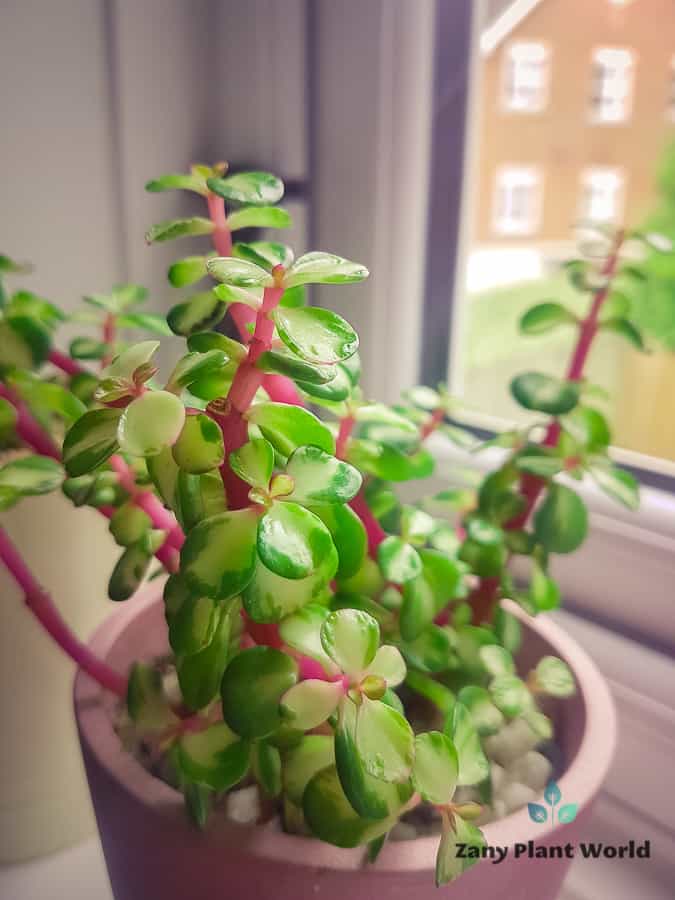
Yes, a windowsill may be enough light for indoor succulents. However, knowing where your window is facing must determine how much light passes through. When we talk about window orientation with regards to light intensity, we use the following terms:
North-Facing Windows: There are dark areas that receive low light. Sometimes they are just completely shaded from any direct light. Because of that, these types of windows give the weakest light. These are more appropriate plants that love the shade and those that do not require much light.
South-Facing Windows: These windows give the brightest and the most intense light. Therefore, this window orientation is best for plants that love sunlight and those that thrive in bright, direct light. Winter plants are unsuitable and must not be placed near these windows.
East-Facing Windows: When you place your plants near the east-facing windows, they will surely get a lot of light from the early morning sun. These light rays are not as intense as those in south-facing windows. This is the best location for plants that need a lot of morning light but are too sensitive to the afternoon sun.
West-Facing Windows: These windows are perfect for sun-loving plants, providing plenty of afternoon and evening sun. However, this window’s sun can be extreme in the summer heat.
On a personal note, I like to keep my succulents in the west and south windows because they do not stretch that much. Also, some low-light succulents can tolerate east and even north windows with minimum sunlight.
Can succulents grow in the shade or in low light?
Yes, succulents can grow in the shade or in low light. As mentioned above, succulents only need at least six to eight hours of sunlight to grow properly. Some can even grow with only four hours of sunlight. However, your plants may mature more slowly because of the reduced light indoors.
Since they are highly adaptable, they will indeed survive in the shade or low light for some time. Unfortunately, they will not thrive and succeed if not given proper lighting.
Signs of Light Stress
When succulents do not get enough light they need, they start displaying signs of light stress. Likewise, succulents that receive too much light will also display signs of distress. It is important to remember that every succulent is different. However, there are a few techniques and patterns you can use and look for to determine whether your succulent is getting too much or too little light.
Signs your succulent is getting too much light.
One of the signs that your succulent is getting too much light is the formation of dark spots unusual for its species. It is either your succulents prefer indirect sunlight or it is so used to being in indirect sunlight and was immediately put into direct sunlight.
Another sign is the discolouration of leaves. Occasionally, succulents that receive too much light develop crispy brown spots. Succulents who love indirect, shady, or filtered light are more likely to experience too much light stress than those who love direct light.
Signs your succulent is not getting enough light
Succulents that do not receive the right amount of light also show signs of stress. This problem usually occurs in succulents that need a lot of bright and direct light.
The main signs that your succulent is not getting enough light are stunted growth, discolouration of leaves, dropping leaves, and leggy growth.
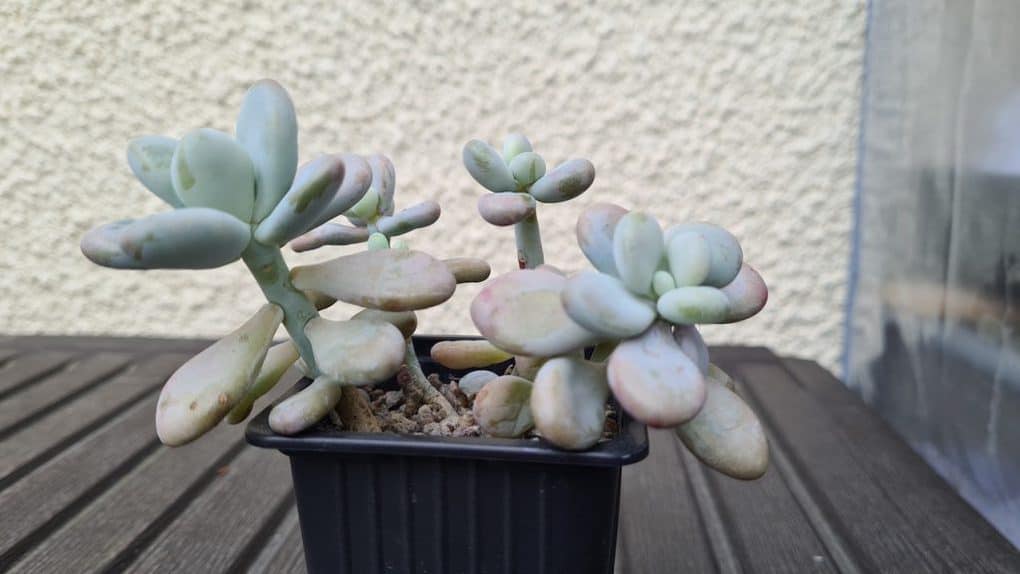
Your succulent basically looks different from what it should look like. In other words, it is not growing the way it should grow – they have smaller leaves and more upwards or sideways growth.
If your succulents are not receiving enough light, you must place them in a lit area to slowly avoid burns. Slowly means placing the succulents in indirect light first for a few days or weeks, then gradually putting them into a room with more direct sunlight if necessary.
How to measure the light?
Since the amount of sunlight is vital, it is crucial to ensure the amount of light needed. So, how do we measure light? Before we talk about that, let me introduce some basic terms when measuring light.
Foot-Candle
A foot candle is a measure of light intensity. To easily visualize what a foot-candle is, just imagine placing a candle at 1 foot from a flat wall where you drew a square measuring 1 square foot.
Lumen and Lux
Lumen measures the total amount of visible light given by a source. Remember that lumen is the basis for all the other measurements of light. To visualize, just imagine a candle in the middle of a circle with a two-meter diameter. If you cut a 1 square foot hole in the center, the light that passes through is the lumen.
A foot-candle is equal to one lumen per square foot. Take note that this is a British measurement, but if you use the metric system, a lumen is measured by a square meter or a lux. Therefore, a foot candle is equivalent to around 10 – 10.50 lux.
What are the tools needed to measure the light?
Here, I present three methods on how to measure light. I provided a simple procedure, a not-so-simple method, and the easiest way to measure light.
The Simple Method
In this method, you have to pick a location in your house where you are considering placing your plants. Then, at the brightest time of the day (around 12 NN), hold your hand up and look at the shadow.
You will know that it is a place where the high light is if your shadow is crisp and well-defined. There is also a stark contrast.
The spot will have a low light if the shadows are faint and have an unclear outline.
This is the least precise way of measuring light. However, it is enough to estimate your lighting conditions.
The Not-so-simple Method
This method works if you are an iPhone user. There is this app called Light Meter, which is only available on iPhones. It is very cheap. It only costs $1.99, is very worth it, and is easy to use. You just have to open the app and direct the camera to spot where you plan to put your plants.
If this is unavailable in your country, you may check other light meter apps. Some, however, do not use foot candles; instead, they use lux.
The Easiest Method
The easiest method is to buy a portable light meter. This device is much more accurate than the light meter app on your iPhones. It is an excellent and reliable way to measure light. There are a lot of light meters out there on the market. I forgot the brand I used before, but rest assured that they all function similarly.
Again it is vital to know your plants and their light requirements so you can give them what they need.
Is a light timer necessary?
A timer is excellent, especially if you tend to forget things. Aside from that, lights should really be turned on and off consistently for better plant growth. If you do not want additional expenses, then you may just use a timer or utilize the natural light.
Do succulents need natural sunlight?
Yes, succulents need natural sunlight, but it is not necessary. Not everyone is blessed with good natural daylight. Some of you guys here live in areas where the evening is longer than a day. Some of you do not really have the space to place your succulents under natural light.
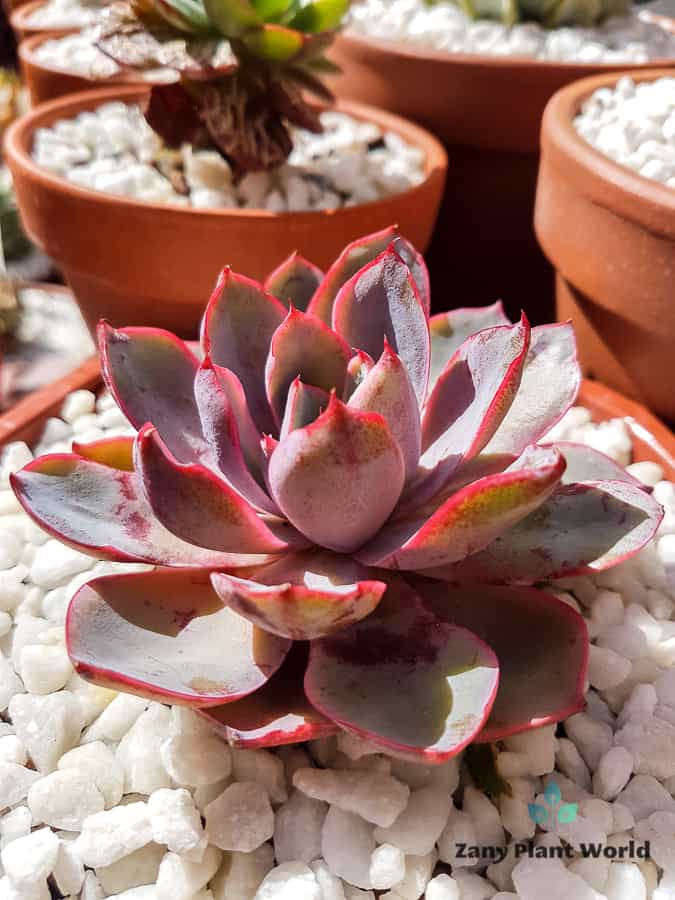
The bottom line is if natural light is unavailable, you can just use artificial light. However, you must choose the most suitable artificial light for your and your succulents’ needs.
Artificial Light
Grow lights are artificial lights that imitate natural light to stimulate plant growth through photosynthesis. You can also use grow lights as supplements when there is not enough natural sunlight.
There a various grow lights available in the market. Some are created to mimic natural light or provide a specific light colour to a plant.
How to choose the best grow lights?
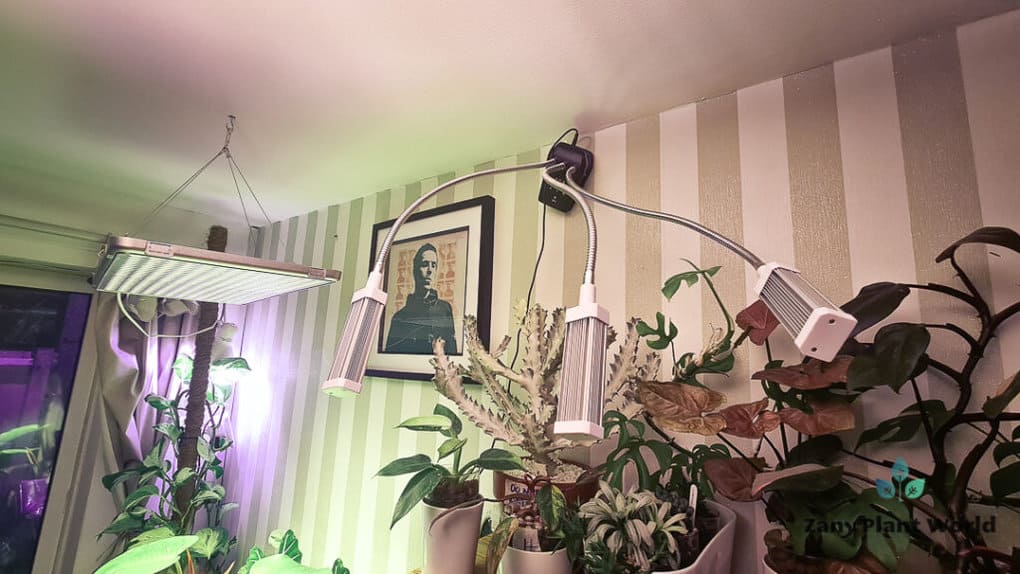
Aside from the price of the grow lights, you also have to consider some important features when choosing an artificial light or grow light. You may view the following:
The Intensity: It is crucial to figure out how bright the light is because different plants need different light intensities. Remember that plants need to receive a certain amount of light for photosynthesis. Now, for succulents, you need lights that emit at least 2,000 lumens per square foot or 3000 lux or 249 foot-candle.
The Wattage: This is important, especially if you are conserving energy and want to pay fewer electrical bills. Take note that the greater the watts, the more it costs on your electric bill. My tip is to find energy-efficient bulbs that will give you the brightness that your plants need.
The Color: As we all know, the sun’s light is a spectrum, meaning there are many colours in it. Like outdoor plants, indoor plants grow best under full-spectrum light bulbs because they imitate natural sunlight. Full-spectrum light bulbs also have a balance of warm and cool lights. For succulents, the colour temperature should be at least 5,000 kelvins.
Heat and Duration: Knowing how much heat the light bulb emits is necessary. Of course, too much heat may burn your plant; too little may stunt its growth. Heat and duration also allow you to estimate how far or close your plants should be from the light source.
LED vs. Fluorescent: Take note that LED and fluorescent light produce full-spectrum light. The difference is that fluorescent light is a better remedy to low light problems. However, it requires higher energy usage. On the other hand, LED lights use less energy and last longer than fluorescent lights.
How long should grow lights be on for succulents?
As mentioned in the previous blog post (Read: Etiolation: Why Succulents Grow Leggy And How To Fix It), the ideal light for most succulents is around 3000 Lux (lx) or 279 Foot Candle (FC) for at least 6 hours every day.
Can Succulents Grow In My Bathroom?
Ideally, no, you cannot grow succulents in your bathroom. However, it might be possible if you have perfect artificial light or a window that allows light to pass through enough for your succulents’ needs.

ABOUT THE AUTHOR:

Zany Plant World
Succulent and Houseplant blogJoin me in exploring the beautiful and colourful world of succulents and houseplants, one plant at a time! Zany Plant World blog aims to help newbies and fellow plant enthusiasts grow healthy and happy succulents and houseplants at home. Turning your house into an urban jungle oasis that can give you the zen vibes that we all need in this crazy and busy life.