Are you wondering about the great perks of using Seaweeds for plants? In the previous post, I discussed a very popular chemical fertilizer and what is NPK including Plant Nutrition and Fertilisers. However, I received some requests from our friends to talk about organic fertilizers.
I wrote another article that discusses about different types of organic fertilizers. I encourage you to read it.
Of course, as your friendly plant mom, their wish is my command. Now, let me introduce you to the wonders of seaweed!
Seaweed is an umbrella term for the various types of algae and plants that can be found under the sea. These come in different colours – red, brown, and green. The idea of using seaweed as fertilizer is not new. Our ancestors have been using this as fertilizer because of its nutrients. Nowadays, gardeners go near the sea to collect seaweeds, but there are already seaweed fertilizers available in the market.
Seaweeds have abundant minerals and traces of elements such as phosphorus, calcium, zinc, iron, and magnesium, among others, that enhance plant resistance. Some seaweeds, such as rockweed (Ascophyllum nodosum), contain glycine betaine, which was proven to augment plant resistance, particularly in times of drought or too much salt.
Seaweed could be the solution to plant drought, especially now that summers keep getting dryer!
However, all these things mentioned above are not why seaweeds are becoming popular nowadays. Seaweeds also have the necessities of plants, such as vitamins, amino acids, and enzymes.
So, if you are interested in knowing more about your plants’ seaweeds, make sure to read the rest of the post.
What are the types of seaweed?
Remember that seaweeds are not plants. Instead, they are a group of species that fall into three groups:
- Phaeophyta or the Brown Algae
- Chlorophyta or the Green Algae
- Rhodophyta or the Red Algae
Although algae are not plants, seaweeds and plants have similar characteristics. For example, they both use chlorophyll for photosynthesis, and both have cell walls. However, seaweeds have no roots. They also do not have internal vascular systems, nor can they produce flowers and fruits.
Brown algae are from the phylum Phaeophyta, which means dusky plants. This is the most prevalent type of seaweed. These algae are commonly found in temperate waters or Arctic climates.
Although seaweeds thrive in saltwater and freshwater, kelp, a brown alga, only grows in saltwater. They can usually be found along the coastlines. There are about 30 kelp varieties.
Kelp is very nutritious and beneficial for both humans and plants. It contains vitamins and minerals like vitamins K, A, C, E, and B12, among others. It also has magnesium, iron, sodium, and phosphorus.
Red Algae also has a lot of varieties, although it is not as widespread as brown algae. They get their brilliant colours due to the presence of phycoerythrin. Red algae live deeper than brown and green algae because of their ability to absorb blue light.
Green algae are the least among the three. Only around 4,000 species of green algae exist on the planet. Green algae are commonly found in marine or freshwater habitats.
Is seaweed fertilizer good for all plants?
Yes, seaweed fertilizer is suitable for all types of plants. Seaweed fertilizers deliver nutrients and minerals to any kind of plant for them to thrive. Studies showed that the benefits of seaweed fertilizers to plants go beyond plant nutrition.
Aside from providing nutrition, seaweed fertilizers also promote bacterial activity in the soil, which improves the ability of roots to absorb nutrients. Seaweed fertilizers also improve the plant’s resistance to disease, pests, and other types of stress.
Which plants like seaweed fertilizer?
As mentioned above, any plant benefits from seaweed fertilizers. Remember that seaweed is a potent fertilizer with many minerals, vitamins, and hormones that encourage plant growth.
Even though most plants like seaweed fertilizers, particular plants find seaweed fertilizer is the most beneficial. The list below shows the plants that love seaweed fertilizers:
- Geraniums
- Grapes
- Gadiolus
- Cucumber
- Gardenias
- Camellias
- Azaleas
- Rhododendrons
- Native plants
What are the uses of seaweed fertilizers in plants?
For plants, seaweed fertilizers are very handy. This is why most plants love them. Seaweeds function in:
- Seed germination: If you want the seeds to sprout quickly, spray the seeds with seaweed fertilizer right after the seeds are planted. Some gardeners soak the seeds overnight in a seaweed fertilizer-water solution before planting them.
- Seed root growth: Putting seaweed fertilizer in the seedling’s soil can enhance the microbial activity that the seeds need to absorb nitrogen from the soil.
- Transplanting: If you plan to transplant a root from one pot to another or from one garden plot to another, you can spray the root with seaweed fertilizer. Doing this ensures the root is guaranteed to thrive in the new environment.
- Foliar application: Liquid-form seaweed fertilizers can serve as a foliar spray that goes directly onto the leaves. Remember that foliar feeding is sometimes less effective than applying fertilizers via the roots.
How do you use seaweed on plants?
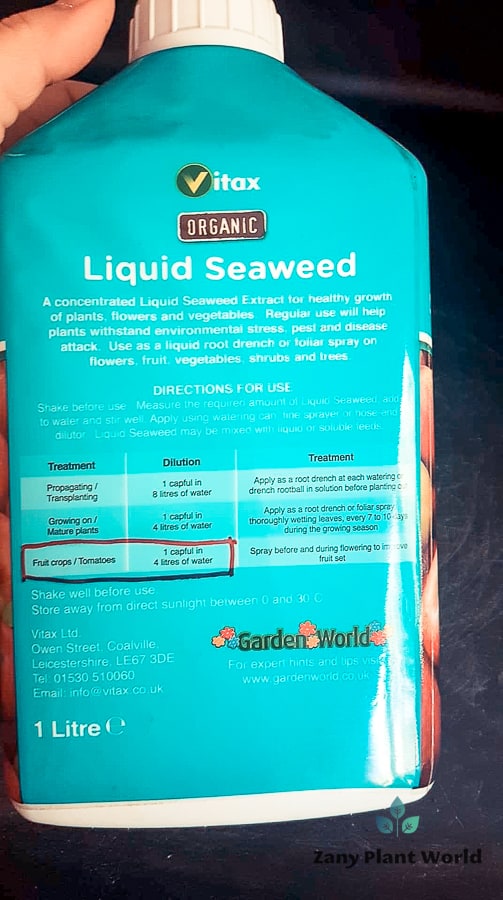
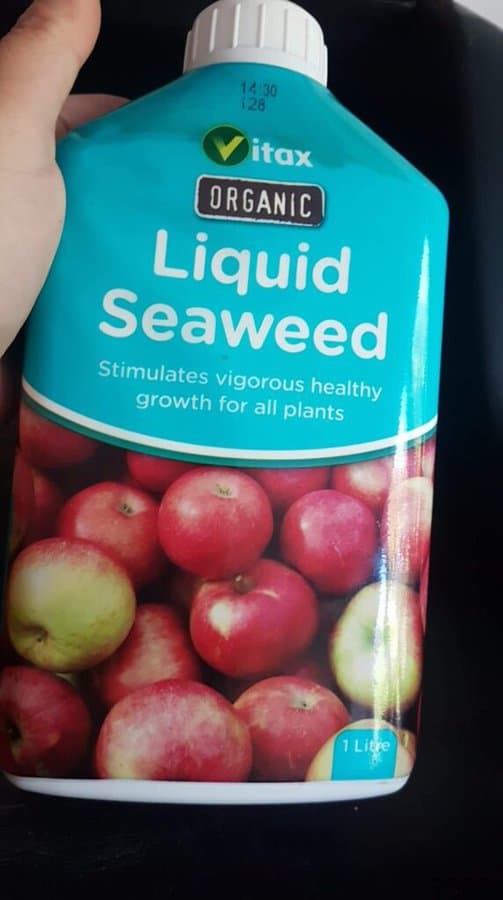
Personally, I just buy a bottle of liquid organic seaweed fertilizers. Then, I include it in the water I use to water my plants. However, there are seaweed fertilizers that are not liquid. So, here are the ways you can use natural seaweed.
- Apply the seaweed not later than 36 hours after gathering
Quick application is needed because seaweed easily breaks down. Leaving it in a container for a long time will make the seaweed too slimy, making it difficult to spread.
- Apply the seaweed thickly.
You must thicken the seaweed (at least 4? – 6”) deep. Again, seaweed breaks down quickly, so you have to ensure it will last for some time.
- Reapply in one week; another 4 – 6” deep.
When seaweed dies, it shrinks. Even though you applied a thick layer of seaweed, it will be dry in just a few days, especially in hot environments. Therefore, it is a must to reapply to provide good coverage.
- Leave a space around the stem.
Although seaweeds shrink when they die, leaving a space around the stem is always a good practice to avoid clogging.
- Mixing seaweed with another seaweed is fine.
Seaweed fertilizers are not that sensitive when they are mixed with other types of seaweed fertilizers. Just use whatever you can get.
- Adding other components is okay.
That is great if you plan to add other things, such as worms and mycorrhiza, for nutrition while using seaweed fertilizer. Again, seaweed fertilizers are not sensitive. This is the reason why products that enhance soil contain seaweed.
- Applying can be through foliar fertilizing.
Seaweed fertilizer is easy to apply. It can be through foliar fertilizing, solution in a container, or directly to the pot. The best way to apply seaweed fertilizer depends on the plant you are fertilizing.
When should I put seaweed fertilizer for plants?
Fertilizers are best applied when the plants are actively growing during the gardening season. Now, the gardening season depends on your location. Here in the UK, the gardening season is between March and September. There are also seaweed fertilizers that are optimized for them to be used during the winter season.
What are the benefits of seaweed for plants’ health?
Like all fertilizers, seaweed fertilizers have a lot of benefits for plants. However, seaweed fertilizer is one of a kind for some reasons. Its benefits include:
- Protection from frost
- Conservation of water
- Protection from weed
- Pest and slug repellant
- Enrichment of soil
- Boost of nutrients
- Lightens soil
- Prolongs life
- Free!
Frost shield. One of the reasons why I use fertilizer is basically to improve the plant’s health, especially in the winter. Seaweed extract or fertilizer can be applied as a foliar spray, using the fertilizer on the leaves.
The foliar application of seaweed fertilizer gives the plants an additional 2-3°C frost tolerance. So during winter, I am not worried because I know that my plants are protected for 10-12 days.
Water conservation. The primary purpose of seaweeds is to keep the soil moist at ground level. These layers of seaweed prevent moisture from evaporating, so there is no need for constant watering.
Weed protection. The seaweeds can cover the soil and block the new unwanted plants like weeds from sprouting. Since the ground under the seaweed is still moist, any weeds that manage to grow can easily be picked up.
Slug repellant. Slugs are easily repelled by salt and sharp-edged things. Since seaweed has natural salt, slugs will not go near it. Moreover, dried seaweeds are sharp, which may cut the slugs’ bodies.
Soil enrichment. Seaweed has excellent versatility and a broad spectrum as a natural fertilizer. It has a lot of minerals and hormones that can easily stimulate plant growth. In addition, seaweeds have high carbohydrate contents, which are part of the essential building blocks of growing plants.
Nutrition boost. Seaweed fertilizer has a lot of ready-to-use nutrients that plants can quickly absorb. With that, seaweed fertilizers can boost lethargic plants.
Soil lightening. Seaweed helps lighten the soil, which improves aeration. Because of aeration, the soil becomes more crumbly and moist. The plants, in turn, will become healthier.
Life extension. Plants, fruits, and vegetables are grown using seaweed fertilizers have a longer life after maturity.
It’s free!
How do you gather seaweed for use in the garden?
If you live near the coast or sea, you have an unlimited supply of seaweed. Harvesting them is also relatively easy. Here are some notes you have to remember.
- Gather seaweed around the middle of the beach
Seaweed is scattered on the beach, from the edge of the water to the highest point of the tide. The seaweed in the middle of the beach is drier than the seaweed at the tide line, making them easier to carry.
- Collect the fine and untangled seaweed
It is best to look for smaller seaweeds because they will be easier to apply to the soil. The large and wide ones are challenging to work around the garden. Know that kelp can be used as kelp tea or as a foliar spray for repelling insects.
How to prepare seaweed fertilizer?
After gathering the seaweed, spread them in a thin layer using any container, then wash it repeatedly with fresh water. Washing the seaweed with fresh water removes excess salts harmful to your plants. After cleaning it, you can now store it in a container.
Now, an optional step is to let rainwater wash it. After washing, spread the seaweed on a surface and allow rain to remove the salt and other excess substances. This will not only purify your seaweeds, but it will also get nutrients from the rain.
Remember not to use seaweed without washing it. Its natural salt content will kill your plants.
How to Make Seaweed Fertilizer?
Making a DIY seaweed fertilizer is very easy. You can save a lot of money, especially near the sea or coast. Here, I will show you two ways how to prepare seaweed fertilizer.
The first is with kelp meal. I find this the most straightforward way to make seaweed fertilizer. Here, you just have to mix a kelp meal with water. The ratio that I usually use is one-quarter cup of kelp meal to one gallon of water.
Then, I let this blend sit for three days. Make sure to stir the mixture every day. You can now use it after. This fertilizer will last for a year if you are kept at a cool temperature and out of direct sunlight.
The second is with fresh seaweed: This one is pretty easy. However, the process is tiring because you must gather the beach’s seaweed. After harvesting, bring the seaweeds home, rinse them, and let them dry under the sun. Once dried, it can now be mixed with other organic matter like dry leaves. After a day or two, you can apply the mixture to your garden.
Are seaweed extracts alternatives to NPK fertilizers?
It can be an alternative to NPK fertilizers, but not if they are used independently. Using seaweeds alone to replace NPK fertilizers is not a good idea. Although seaweeds have a lot of nutrients, the concentration of each nutrient is relatively low compared to NPK.
What you can do is use it with NPK fertilizers to improve the effectiveness of the fertilizers. In addition, you will most likely be spending less on that.
But if you are strictly following the “organic only” fertilizer. You can try using seaweed fertilizers with rainwater. This combination will surely improve the health of your plants.

ABOUT THE AUTHOR:

Zany Plant World
Succulent and Houseplant blogJoin me in exploring the beautiful and colourful world of succulents and houseplants, one plant at a time! Zany Plant World blog aims to help newbies and fellow plant enthusiasts grow healthy and happy succulents and houseplants at home. Turning your house into an urban jungle oasis that can give you the zen vibes that we all need in this crazy and busy life.