Are you wondering what are the best plants for LECA and semi-hydroponics growing? I have been growing various rare to common houseplants and succulents in LECA and semi-hydroponics for a few years now. I love LECA as a growing medium for the majority of my plants because of its sustainability and plant health benefits.
I must admit, I do tend to forget when to water my plants. Hence, growing most of my plants in LECA and semi-hydroponics is ideal so the plant will get water whenever they want to. Plus, it is also husband-proof! Very handy when I go travelling for a few days or weeks and leave my plants to my husband’s care.
Let me share with you my personal experience on what I think are the best plants for LECA and semi-hydroponics growing.
Best plants for LECA and Semi-hydroponics growing:
Echeveria
Echeveria is a type of succulent that might be unusual to be included in as one of the best plants for LECA growing. I have grown echeveria in LECA and semi-hydroponic successfully.

I have discussed in another blog post that I wrote about Can You Grow Succulents in LECA and Semi Hydroponics? I managed to grow and keep the fussy chubby echeveria happy by growing them in LECA. This ensures that their root system gets enough air flow and lessen the chance of overwatering them.
Sanseveria
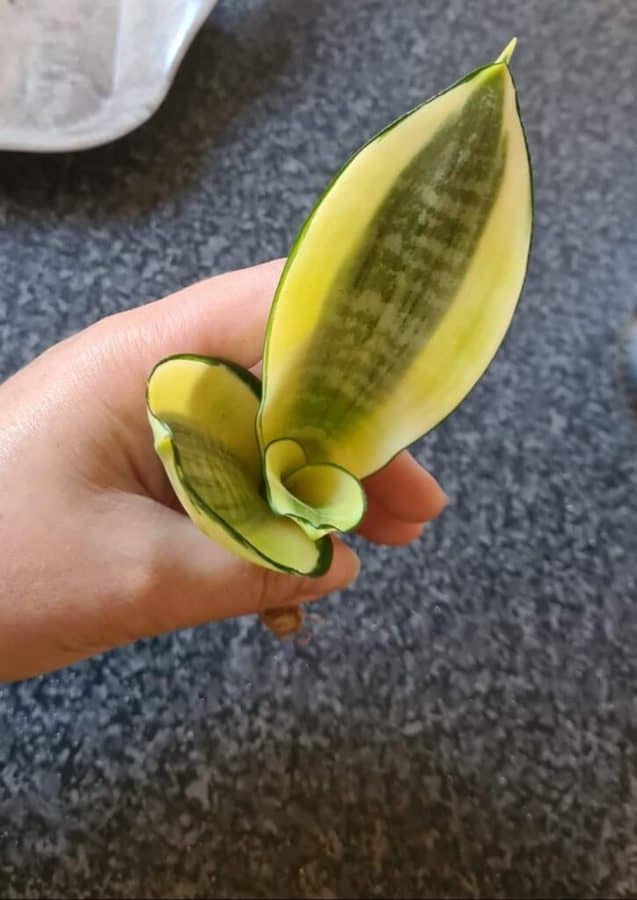
Sansevieria plant is one of the drought-tolerant plants. I managed to grow a sansevieria plant in LECA and semi- hydroponics successfully from a cutting. Converting a sansevieria plant from soil to LECA can be tricky, the soil roots can potentially rot since it is not used to the moist growing environment of LECA and semi-hydroponics.
ZZ Plant

Zamioculcas zamiifolia also known as ZZ plant or Zanzibar gem. A tropical plant that has a bulb that makes this plant extremely drought tolerant. I have managed to switch a ZZ raven plant from soil to LECA and semi-hydroponics. successfully.
In switching my ZZ raven plant, I placed it in a tall vase and kept the LECA dry for at least 3 weeks before I introduce a tiny amount of water reserve. Since the ZZ plant is very moisture sensitive and would prefer to have a dry environment.
By growing the ZZ plant in LECA, its thick roots can enjoy a good airflow and avoid overwatering. Once you have seen the new roots growing, you can slowly add more water to the reservoir to ensure that will fully adapt to the semi-hydroponics set-up.
Syngonium
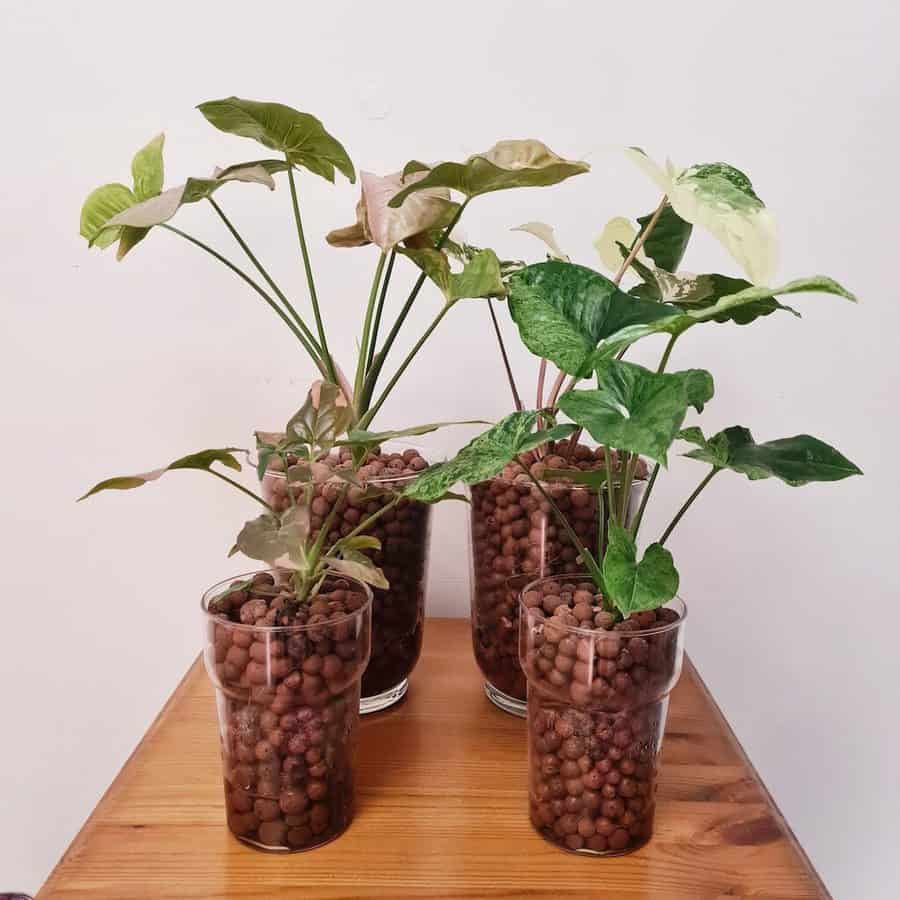
Syngonium is one of the easiest plants to transition to LECA and semi-hydroponics. It is a tough plant and can withstand most environmental stress. I do have a few Syngonium plants in my collection and all of them are planted in LECA and semi-hydroponics.
Back in my home country – the Philippines, Syngonium plants grow like a weed near the streams or the paddy fields. It loves a moisture environment for it to thrive, hence it is one of the best plants for LECA and semi-hydroponics growing.
The Syngonium plant has very thin leaves, so it is easy to succumb to leaf yellowing and dryness. By growing the Syngonium plant in LECA and semi-hydroponics it will have a better chance to have healthy and lush leaves.
Monstera Thai Constellation

Monstera Thai Constellation is one of the very popular rare aroids. The Monstera Thai Constellation is a product of Tissue Culture on plants that are made in Thailand. It has creamy stable variegation that’s loved by the rare plant collectors.
I have managed to grow my Monstera Thai Constellation in LECA successfully. I have made another blog post about How to Plant Monstera In Leca (Detailed Guide) where I have discussed how you can switch your Monstera Plant into LECA growing.
Monstera Albo Borsigiana Variegata

Monstera Albo Borsigiana is another trendy plant for rare plant collectors. Its beautiful abstract white variegation captivates the heart of many. Of course, it comes with a big price tag like the Monstera Thai Constellation.
I have managed to convert my Monstera Albo Borsigiana from soil medium to LECA and semi-hydroponics by following the blog post I shared above.
Hoya

Hoya is also known as Wax plant due to its shiny and thick leaves. The majority of the Hoya species can be found in the Philippines. Hoyas are known to be drought-tolerant plants like succulents. They love a high humidity environment hence Hoyas do not need a lot of watering.
I do have a few rare and variegated Hoyas in my collection. I do prefer to grow them in LECA as they are healthier and growing really fast. Make sure that you transition the Hoya plants carefully in water or perlite first before moving them to LECA to encourage the growth of the new roots.
Philodendron

Philodendron is part of the Araceae family and has around 489 plant species. Most of my houseplant collection are Philodendron. They are just so easy to care for even for beginners. I also think that Philodendron is one of the easiest plants to convert to LECA.
My technique in transitioning Philodendron plants to LECA is to encourage the “water roots” to grow first in water with Epsom salt for plants or CalMag solution. Once the new roots developed around 3 to 4 inches in length, then I will move the plant to LECA. This is to ensure that the new roots won’t easily get damaged and are more stable.
Haworthia
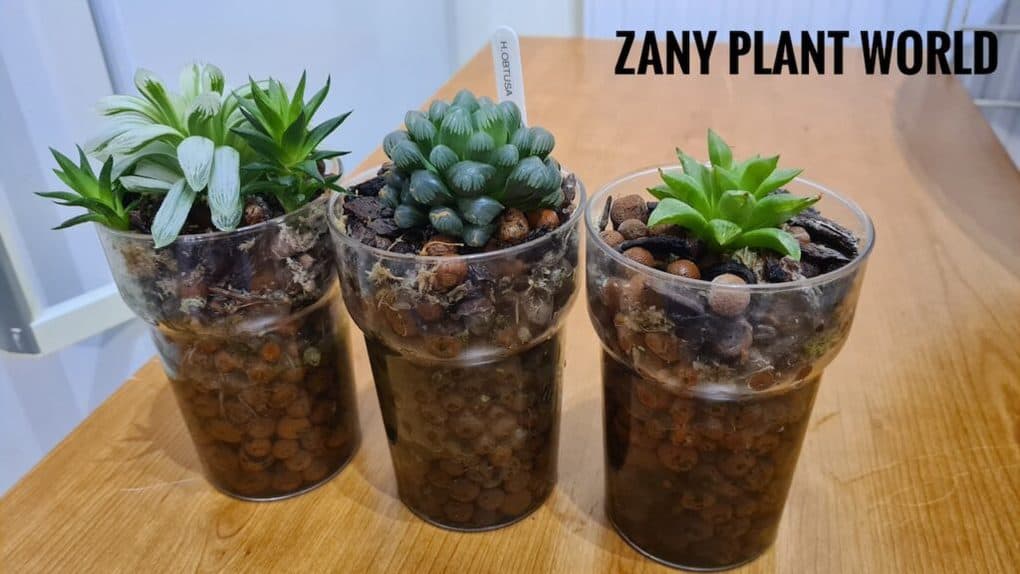
Haworthia is one of my favourite succulent plants. They are mostly endemic to South Africa. One distinctive feature of some Haworthias is their translucent windows located mostly on the top part of the plant that serves as a gateway to absorb the light.
Haworthia loves a bit more moist environment compared to other succulents. However, they still need a fast-draining growing medium. As a form of experimentation, I have tried to grow some of my haworthias in LECA.
I have managed to successfully transition some of my rare haworthia plants into LECA and semi-hydroponics. I planted the haworthias mostly in LECA and put some bark, grit and moss as a topping to ensure that the top part won’t dry out so quickly and keep the top area relatively moist.
Senecio

Senecio is one of the largest genera of flowering plants. Most of the Senecio plants are used in various succulent planters. I do have a few Senecio plants in my collection.
I managed to convert a Senecio peregrinus (String of Dolphins) and Senecio rowleyanus Variegata ( String of Pearls Variegated) from soil to LECA growing and semi hydroponics. It was a challenge for me to grow these plants in my usual gritty succulent soil mix.
So when I tried to grow them in LECA, I was surprised that these Senecio plants loved the LECA as their growing medium.
Peperomia
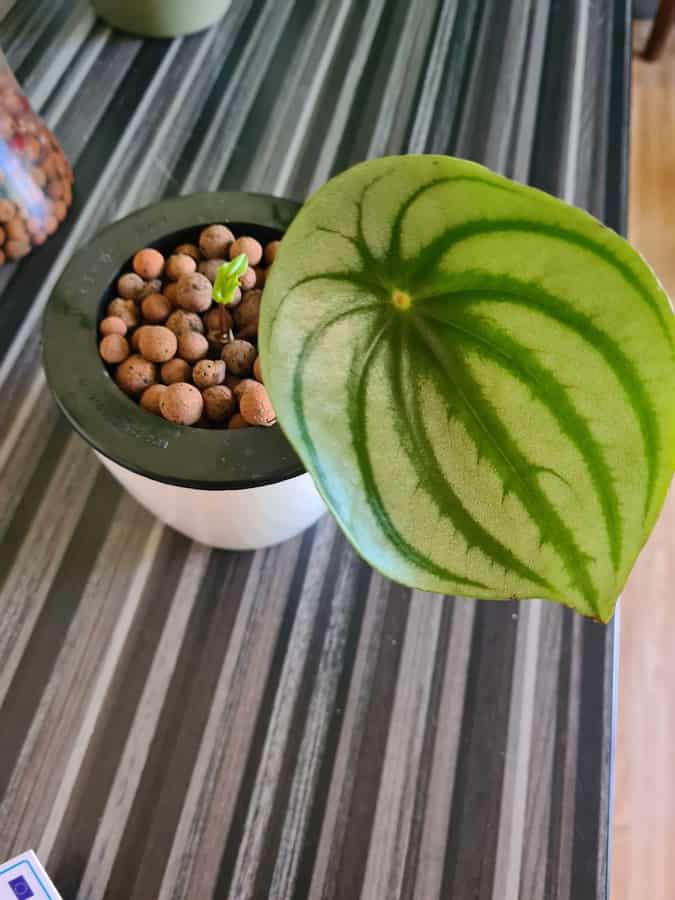
Peperomia plants are epiphytes growing on trees. Peperomia plants are one of the best house plants for beginners. They are easy houseplants to look after they love moisture yet fast-draining medium.
I have tried to transition a cutting of Peperomia Argyreia (Peperomia Watermelon) in LECA and semi-hydroponics and surprisingly thrive. The thin roots grab hold of LECA and it starts to grow.
Anthurium

Anthurium plants are part of the Aroid family native to South America. Most of them are epiphytes and some are terrestrial. It loves the moisture growing conditions.
Anthurium plants are known for their beautiful flowers and textured patterned leaves. Based on my personal experience in growing Anthuriums, they are challenging and unforgiving when it comes to their environment. If the ideal growing conditions of Anthuriums are not met, you will see effects on their leaves.
I have grown a couple of Anthuriums in my collection in LECA and semi-hydroponics. They thrive mostly on the high humidity and high moisture growing medium.
I spray them with water once a day and I also put moss on top of their pots to cover the LECA. This is to ensure that they will keep the moisture consistently within the pot.
Euphorbia
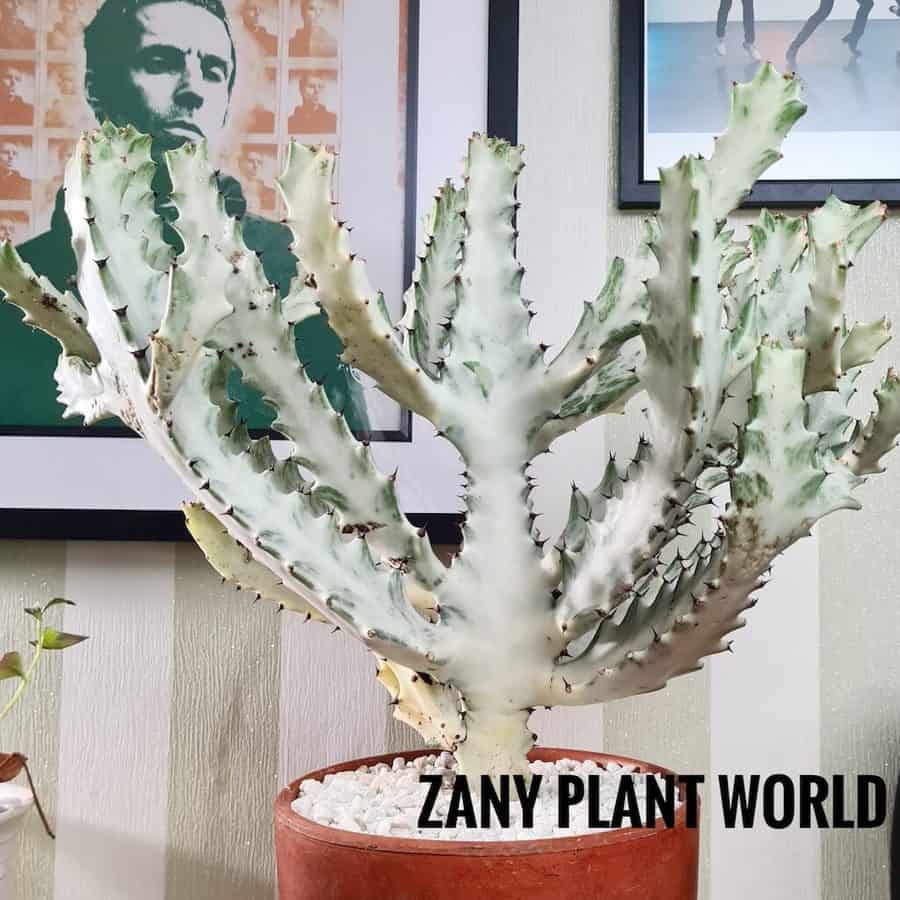
Euphorbia plants are almost like succulent and cacti plants. They are drought tolerant and yet also forgiving if grown in a slightly humid environment. I only have one Euphorbia in my collection, I do have the Euphorbia Lactea Variegata “Dragon Bones cactus”.
They are popular with their distinct white body that resembles a candelabra. Just look how beautiful it is! However, be extra careful on its sap as it is poisonous and extremely irritant to the skin and eyes.

I took a cutting from the mother plant Euphorbia Lactea Variegata, I had it dry for a few days and then let it root and grow in LECA. I make sure to initially plant the cutting on dry LECA to avoid any fungal rot and humidity. After a few weeks, I slowly introduce water to its container. By then, the new adapted roots loves LECA life.
Ficus
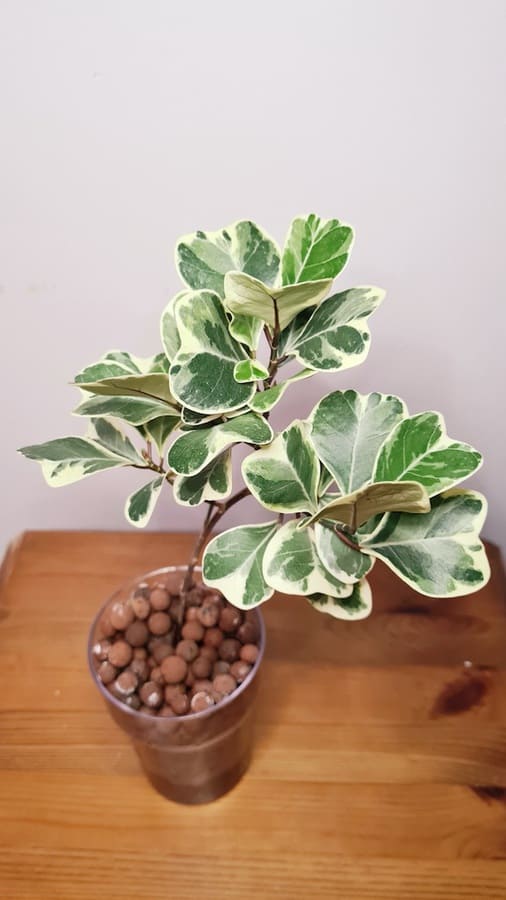
Ficus plant or popularly known as the Rubber tree. They are trendy statement houseplants due to their beautiful colours and leaf patterns. Ficus plants are notoriously known for being fuzzy plants and will shed their leaves if the right conditions are not met. They hate being moved around and they love a bright and sunny spot.
I only have one Ficus plant in my collection. I do have the Ficus triangularis variegata “Ficus sweetheart”. I took a cutting it as an “insurance plant”, just in case they kick a fuss and won’t like their new growing conditions.
I had great success in rooting the cutting in water on a heated mat. Then once the root grew into a few inches long, I planted it to LECA and semi-hydroponics. Surprisingly this fussy Ficus plant loved it!
Pothos

Pothos plant (Epipremnum aureum) is also called Devil’s Ivy plant that is originally from the Pacific island of French Polynesia. It is so easy to care for and ideal for newbie houseplant collectors.
Pothos comes in different beautiful leaf markings pattern. I do have three varieties of Pothos plants in my collection: Pothos Manjula “Happy Leaf”, Pothos Marble Queen and Pothos N’joy.
Since pothos is easy to care for, it grows prolifically! So I took a few cuttings and let them root in water on a heat mat and when the “water roots” grow for a few inches, I plant them in LECA. Just ensure to plant them a bit deeper the usual because they have the tendency to tip off the LECA medium.
However, once the Pothos roots grab hold of the LECA they will be sturdy and grow happily in LECA and semi-hydroponics. My pothos in LECA seems growing more healthier than the other Pothos in organic mediums.
I hope that this list of my best plants for LECA and semi-hydroponics will help you to grow these plants as well.

ABOUT THE AUTHOR:
Ryazan Tristram
Succulent and houseplant collectorI’m Ryazan, confessed succulent-holic and proud plantita (plant mom) based in Birmingham, UK. Proud succulent hoarder for a couple of years now and my collection keeps growing! Let me help you to turn your home into a succulent and houseplant oasis that you will love!
When growing senecio and echeveria in Leca, do you have them in a reservoir as well as the Leca container? I have had success with philodendrons but haven’t tried succulents of any kind. Thank you for your assistance. Judith